
There’s a strange paradox when Styling an Open Plan Living Space. The more space you have, the easier it is to fill it, and somehow, the faster it starts to feel messy.
You’d think fewer walls would mean fewer problems. In reality, it just means everything is on display, all the time.
That’s what makes styling an open plan space tricky. It’s about editing and not just decorating. Moreover, it’s about knowing what deserves to be seen and what quietly needs to disappear. Once you strike that balance, the whole space starts to breathe.
Let’s walk through it together. And see how you can style an open plan space without clutter.
Start with Invisible Boundaries
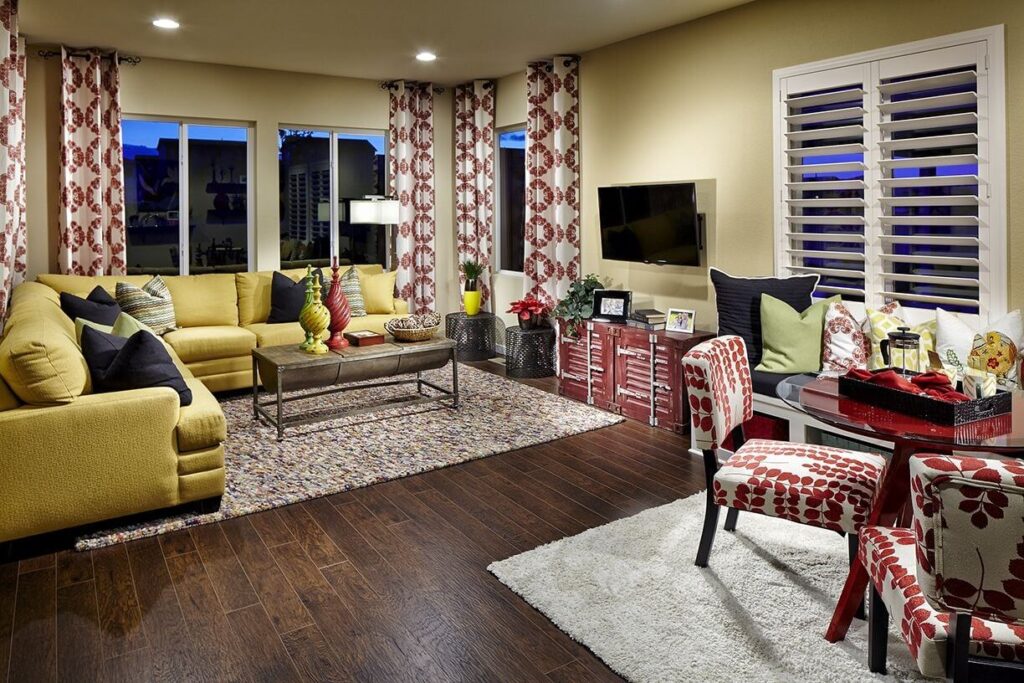
In an open plan, you do not need to blur everything together, because that’s usually where the feeling of clutter begins.
When the living area, dining space, and kitchen all compete for attention, your eye doesn’t know where to land.
I like to think of it as creating “rooms without walls.” This is the part where rugs come in handy. Think of a large rug under the sofa to anchor the living area. And a different texture or tone under the dining table to signal a shift within the room.
Suddenly, the space feels organized without a single physical barrier.
Furniture placement matters just as much. A sofa facing away from the dining area subtly divides the space. Even something as simple as a console table behind a couch can act like a quiet line in the sand.
The tip is to define zones, even if no one else can see the lines.
Keep a Consistent Color Story

Color is one of those things you don’t notice when it works, but you definitely feel it when it doesn’t. In an open plan space, too many competing colors can make everything feel chaotic, even if it’s technically tidy.
Maintaining a consistent palette ties everything together. That means everything should relate, not necessarily match. Think of it like a conversation. The tones should complement each other, not over-shadow each other.
Start with a base of neutrals, then layer in two or three accent colors. Repeat those accents in small ways across different zones. It doesn’t hurt if a cushion in the living area picks up the same tone as dining chairs or kitchen accessories.
It creates flow without trying too hard.
Use Storage Ideas That Actually Fit the Setup
Did you know that where you place staff in a room can sometimes create clutter? And that clutter isn’t about having too many staff?
In this case, having different storage ideas might help you style your space elegantly without clutter.
Open shelving, for example, can look beautiful, but it demands discipline. If you’re not in the mood to style it every week, closed storage is your best ally. Use cabinets, ottomans with hidden compartments, and sideboards to hold everything you don’t want on display quietly.
My love for baskets, well, has a good reason. They’re simple, a bit forgiving, and perfect for those in-between items that never seem to have a proper home. I use mine to throw magazines, kids’ toys, and other tiny objects.
Baskets make all clutter disappear in seconds.
The goal is to give your life a place to rest, not to hide it away.
Choose Fewer but Better Pieces

It’s tempting to fill an open space because, well, it looks empty at first. But that emptiness is actually doing you a favor. It’s giving your best pieces some room to shine.
Instead of adding more furniture, focus on choosing the right furniture. For instance, a slightly larger sofa often works better than multiple small chairs. One solid coffee table feels calmer than a mix of tiny side tables scattered around.
In design, this concept is referred to as visual noise. Too many small items create it. This means your brain has to process each one, and that’s exhausting. On the other hand, fewer, well-chosen pieces reduce that noise instantly.
Remember, if something doesn’t add function or beauty, it’s probably just adding clutter. So choose wisely.
Let One Area Take the Lead
When everything tries to be the focal point, nothing stands out. That’s when a space starts to feel busy, even if it’s not actually cluttered.
Therefore, pick one zone to shine. Maybe it’s the living area with a bold piece of art or the dining space with a statement light fixture. Let that area carry a bit more visual weight.
Then, let the other areas support it by keeping them simpler and quieter.
Think of it like a good outfit. You don’t wear statement earrings, a bold necklace, and a dramatic hat all at once.
Restraint is what makes the standout moments actually stand out.
Embrace the art of Layering
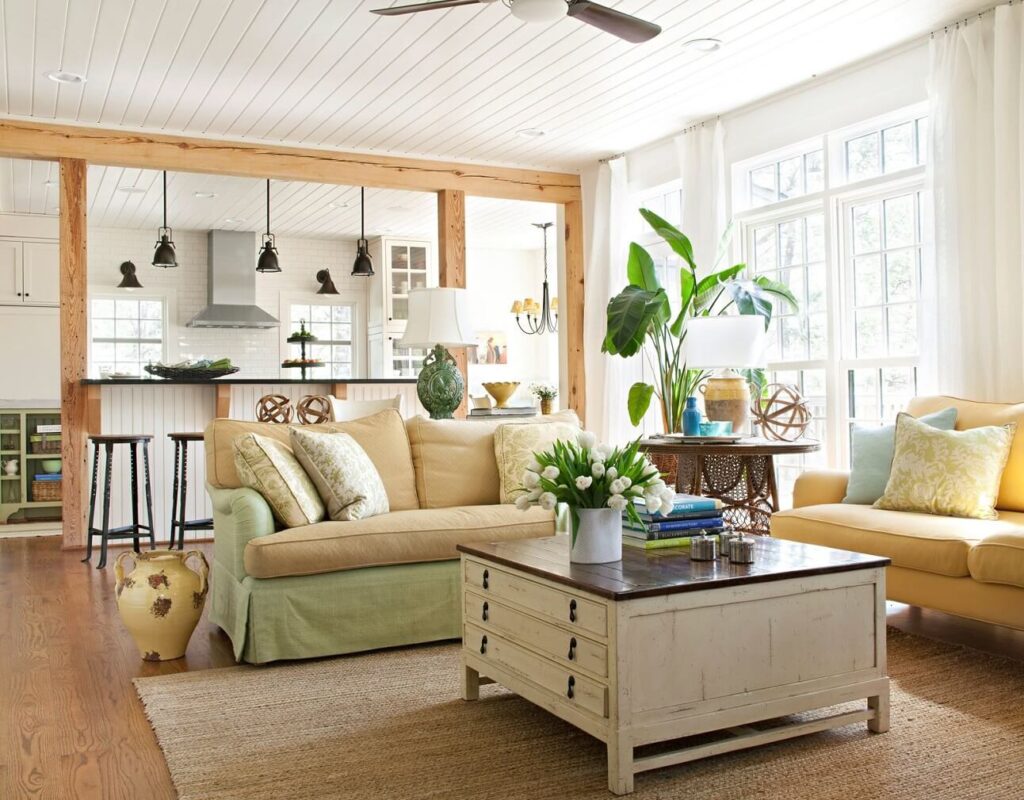
When decorating an open space, avoid spreading things out evenly. That often leads to a scattered look, where nothing feels intentional.
Instead, think in layers and group items together in a way that feels cohesive. A tray on a coffee table, for instance, can hold a candle, a book, and a small object. Suddenly, three items feel like one composed moment instead of random pieces.
The same goes for shelves, consoles, and dining tables.
Grouping creates a structure that guides the eye where to focus, and just as importantly, where to rest.
Pay Attention to Sightlines
This is one of those subtle things that makes a huge difference. In an open-plan living space, you often see multiple areas at once. From the sofa, you might see the dining table, the kitchen counter, and even the entryway.
So, what’s in your line of sight?
If the first thing you see is clutter, that sets the tone for the entire space. Clearing key sightlines can instantly make your home feel calmer.
Keep countertops relatively clear and avoid overcrowding surfaces that are directly visible from main seating areas.
Even shifting a few items can change the vibe in the room.
Some Empty Space Won’t Hurt

This is the most challenging part for most individuals when decorating a home.
Leaving space empty can feel unfinished, like something is missing. But that space is doing important work.
Negative space gives your home some breathing room. Moreover, it highlights what you’ve chosen to include and creates a sense of calmness that no amount of decor can replicate.
There’s a reason art galleries don’t fill every inch of wall space. The emptiness makes the art feel more important.
At home, it does the same thing.
Conclusion
At the end of the day, Styling an Open Plan Living Space is about making decisions and trusting them; it isn’t about finding the perfect sofa or the right rug. It’s.
Clutter often creeps in when we hesitate and keep adding “just one more thing” because something doesn’t feel quite right. But more rarely solves that feeling. Clarity does.
So, if there’s one idea to hold onto, it’s this. A calm space comes from clear choices. Therefore, choose what matters, give it space, and let the rest go quietly.
That’s when an open plan home stops feeling overwhelming. Open, easy, and completely yours to your liking.