
Here’s the funny thing about expensive-looking homes. Most of them aren’t expensive in the way we imagine. They’re thoughtful. They’re edited. They make a few smart choices and then get out of their own way.
I’ve noticed that the homes that feel polished rarely rely on flashy renovations or trend-chasing furniture. Instead, they lean on quiet details, good habits, and a sense of intention.
The kind of stuff that doesn’t scream for attention but still changes the whole mood of a room.
So if you’ve ever walked into a space and thought, “Why does this feel so put together?”, chances are it was doing a handful of these things really well.
Therefore, let’s talk about different ways you can use to make your home feel more expensive on a Budget.
10 Designer Secrets to a More Expensive-Looking Home
1. Declutter like you mean it
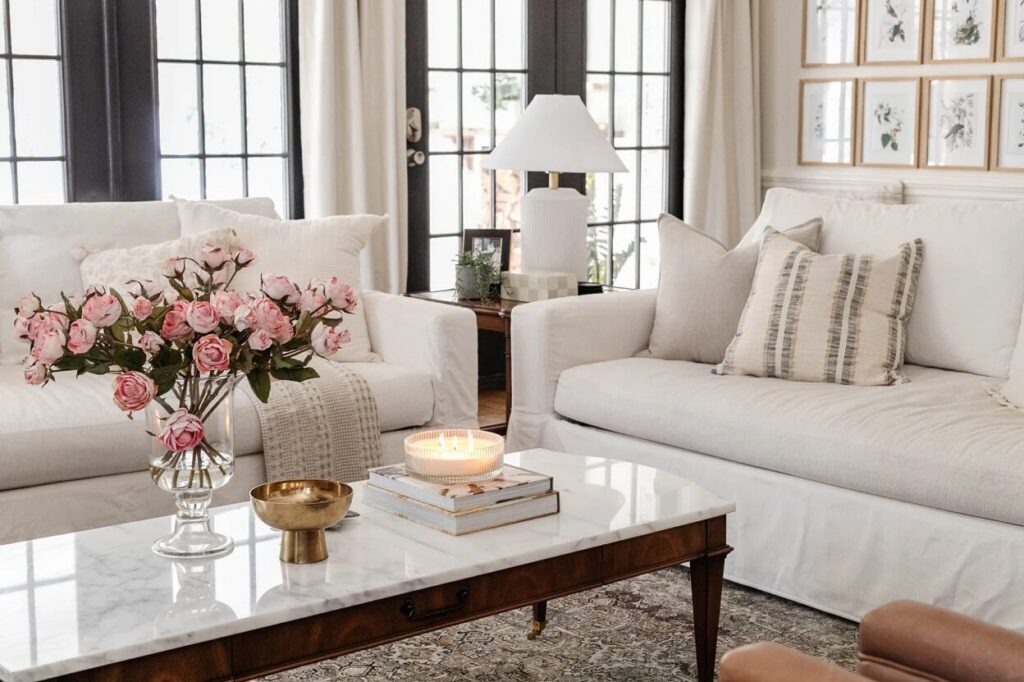
This one is boring. It’s also magic.
Visual clutter makes a home feel smaller, busier, and cheaper, even if the furniture itself is nice. Designers talk about “negative space” for a reason. The eye needs somewhere to rest.
A study published in Personality and Social Psychology Bulletin even linked cluttered environments to higher stress levels, which might explain why tidy rooms feel calmer and more refined.
You don’t need to go full minimalist. Just remove the extras that don’t earn their keep.
Clear surfaces, fewer decorative objects, and drawers that actually close without a fight go a long way.
2. Upgrade your lighting, not just the bulbs

Bad lighting can undo a beautiful room in seconds.
Overhead lights alone tend to flatten everything. They’re practical, sure, but they don’t flatter anyone or anything.
Homes that feel expensive layer their lighting with a table lamp here or a floor lamp there. Maybe a warm wall sconce if you feel more ambitious?
The American Lighting Association research notes that layered lighting improves both comfort and perceived quality of a space. Soft, warm light instantly adds depth and mood. It’s like switching from fluorescent office lighting to golden hour.
3. Stick to a restrained color palette
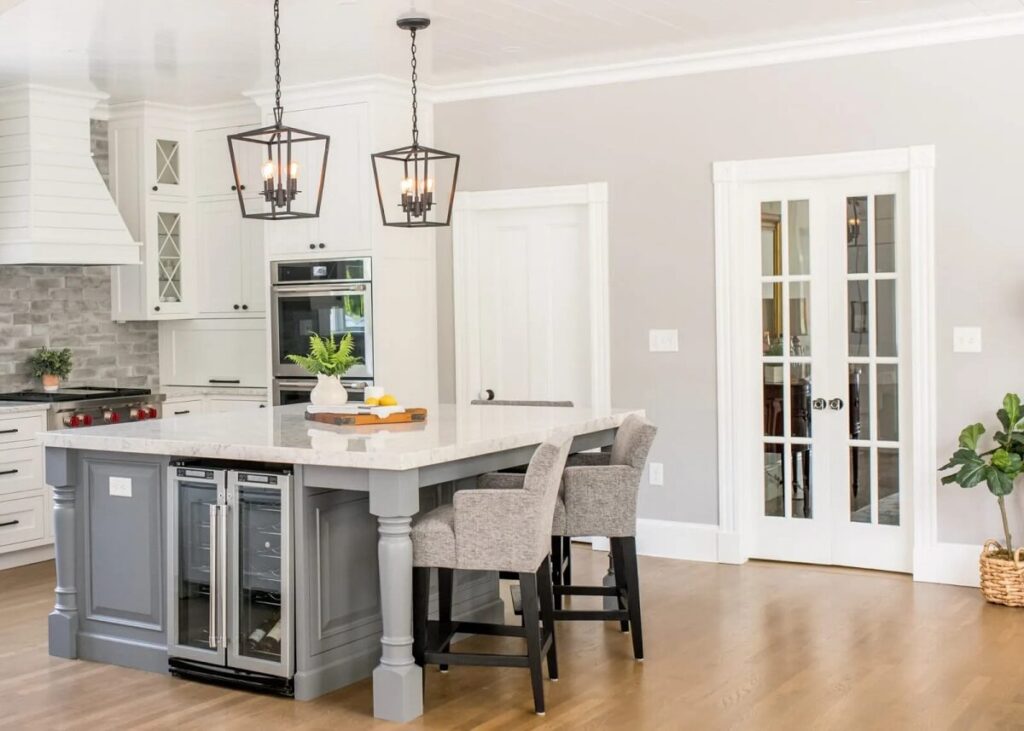
This doesn’t mean everything has to be beige. It means colors should talk to each other.
Homes that feel cohesive often rely on a limited palette, maybe three or four main colors repeated in different shades and textures. When every room introduces a new color party, the house starts to feel chaotic instead of curated.
Neutral bases with intentional accents tend to age better, too. Designers often note that high-end spaces tend to avoid overly trendy colors in large quantities.
4. Hang your curtains higher than feels logical

This is one of those tricks that sounds silly until you see it in action.
Curtains hung close to the ceiling make the walls taller, and windows grander. On the other hand, short, low-hung curtains do the opposite. They shrink the room and break the visual flow.
Interior design studies and professional guidelines consistently recommend mounting curtain rods several inches above the window frame, or even just below the ceiling line. The fabric should skim the floor or get close enough.
It’s a small change with a dramatic payoff that works well in any room. Whether it’s a living room, bedroom, office, or any other space.
5. Swap shiny for solid hardware

Cabinet handles, drawer pulls, and door hardware are tiny, but they get handled constantly. People notice them more than you think.
Cheap, lightweight hardware often has a tell, and it feels hollow. Solid metal hardware, on the other hand, even in simple designs, adds a sense of weight and permanence.
However, matte finishes tend to read more expensive than glossy ones because they hide fingerprints and wear better over time.
This is one of those upgrades where a modest budget can still deliver a big visual upgrade, especially in kitchens and bathrooms.
6. Edit your decor instead of adding more
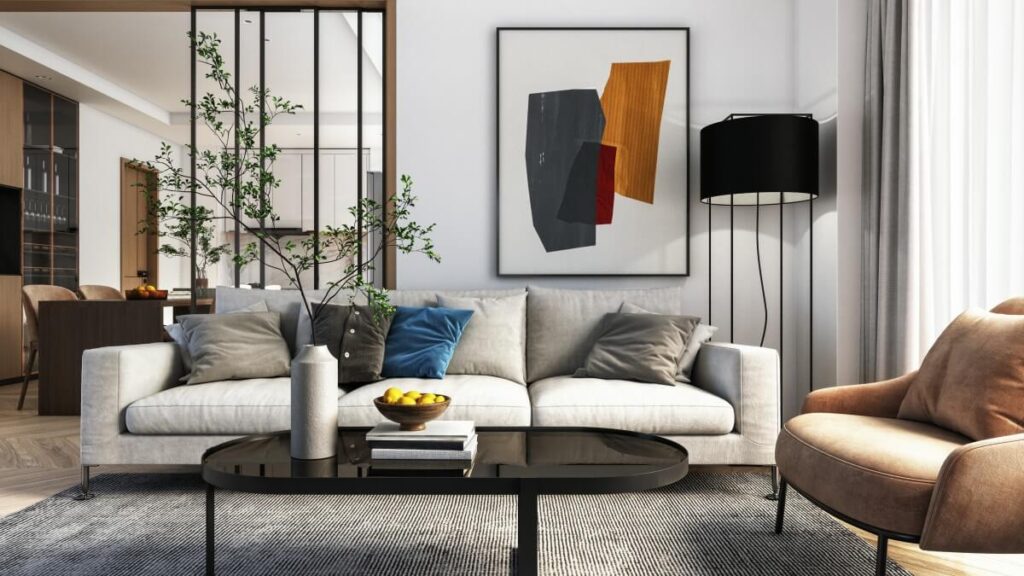
Expensive spaces rarely feel overdecorated.
Instead of filling every shelf and corner, they choose fewer pieces and give them room to breathe. For example, trade those gallery walls full of unrelated prints for a single large artwork to achieve a more luxurious look.
Additionally, go for one sculptural vase instead of five small ones fighting for attention.
There’s a concept in visual psychology called cognitive load. When there’s too much to process, the brain reads the space as messy or overwhelming. Hence, editing reduces that load and makes the room feel intentional.
7. Use texture to add quiet richness

Texture is the secret sauce of high-end interiors.
Try using linen curtains, wool throws, wood grain, ceramic, leather, and stone. When a room relies only on smooth, flat surfaces, it can feel sterile or cheap. Mixing textures adds depth without adding clutter.
This is why neutral rooms don’t feel boring when done well. Since they do not rely on color to do all the work.
Texture acts as a compliment and does the heavy lifting.
8. Make your bed and sofa look styled, not stiff

A perfectly made bed with hospital corners can actually feel less inviting. But a balanced strike between neat and lived-in makes your home feel expensive.
On beds, that might mean layered pillows in varying sizes and a throw casually folded at the foot. While on sofas, a couple of cushions with different textures and one well-placed throw do the trick.
The goal is ease, not perfection. And it should look like you live there, and you care.
9. Bring in something natural
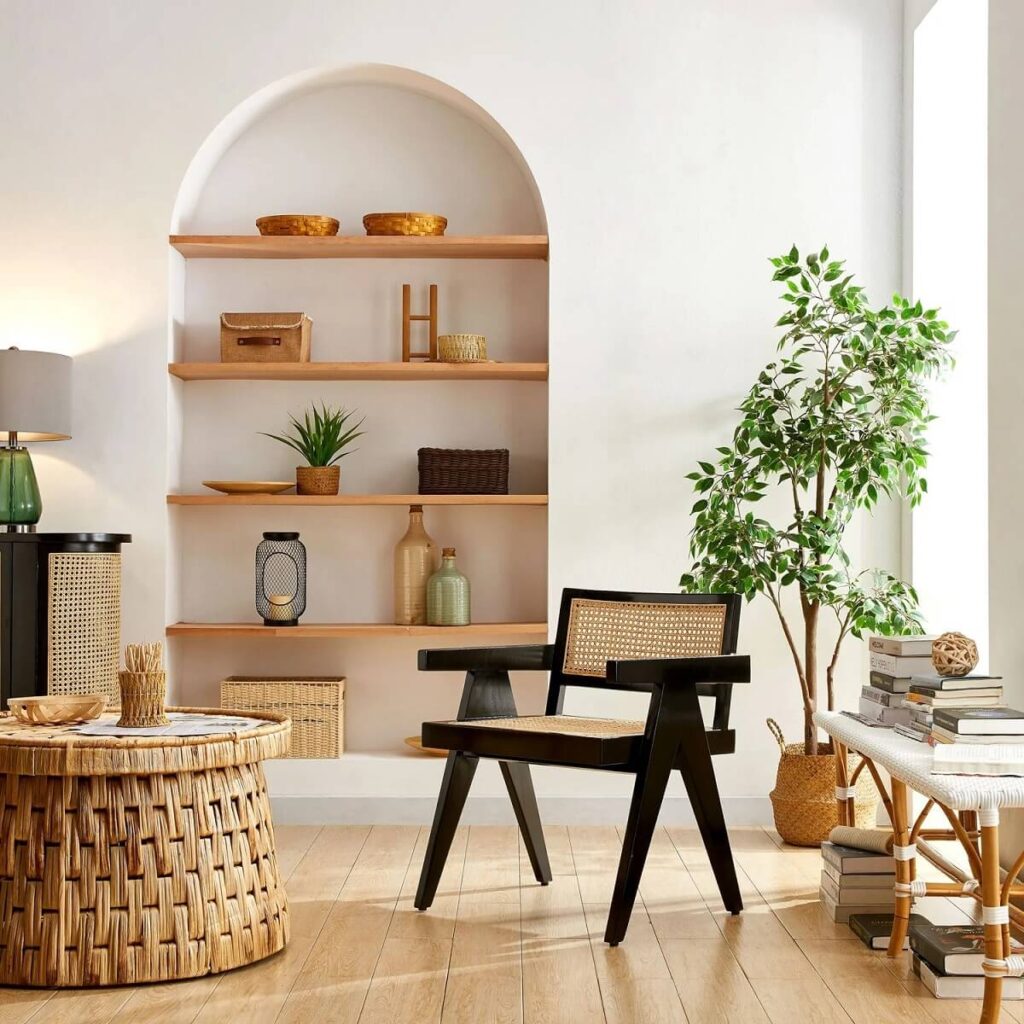
There’s a reason plants show up in almost every professionally styled home.
Natural elements soften a space and liven it. Studies from institutions such as NASA and the University of Exeter have shown that indoor plants can improve mood and perceived well-being.
Even a simple branch in a vase or a bowl of fruit counts.
Consider also real materials such as wood, stone, and natural fibers. They tend to age gracefully and feel more grounded than synthetic alternatives.
10. Keep it clean in the boring places
Although it doesn’t feel glamorous, cleaning the boring spaces matters a lot.
Cleaning the baseboards, light switches, door frames, and grout lines in your home is necessary. These details don’t draw attention when they’re clean, but they absolutely do when they’re dirty.
And there you are, every time you visit your neighbors, you wonder how they manage to keep their homes so exquisite. Now you know how.
I too was just like you a while ago, until I learnt and tried the tricks I’m sharing with you today.
It’s all about regular maintenance.
High-end homes often feel that way because they’re well-maintained, not because everything is new.
Regular cleaning in these spots quietly elevates the whole house. It’s the difference between “nice enough” and “wow, this feels polished.”
Conclusion
Making your home feel more expensive isn’t about chasing luxury.
It’s about intention, fewer distractions, better choices, and a little patience.
When everything works together, the space feels calmer, confident, and organised. And that’s the kind of expense you can actually live with.