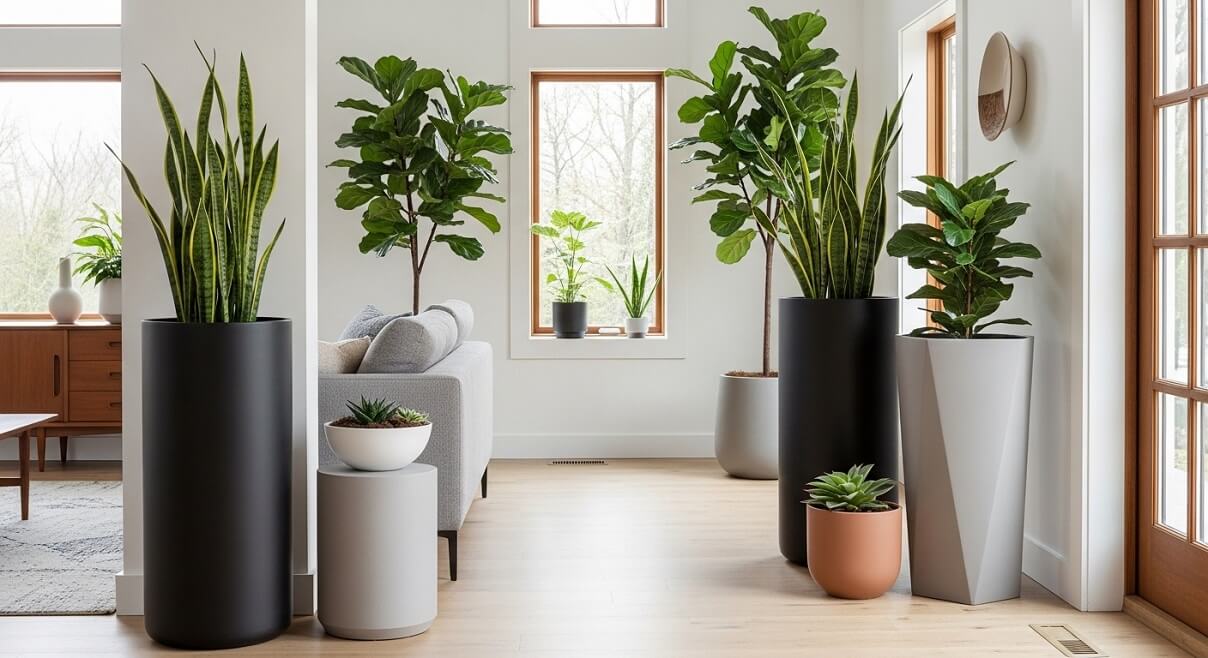
Indoor plant styling ideas don’t have to feel trendy, cluttered, or as if they came straight out of the same manuscript everyone’s seen several times.
When done thoughtfully, plants can quietly transform your space by adding texture, warmth, and life without overwhelming your home. The key is to find creative, natural-looking ways to style greenery so that it feels intentional rather than exaggerated.
In this post, you’ll discover fifteen fresh, effortless ways to bring plants into your space. These indoor plant styling ideas feel timeless, personal, and beautifully lived-in.
15 Timeless Indoor Plant Styling Ideas that Feel Effortless
1. Treat plants like furniture, not accessories
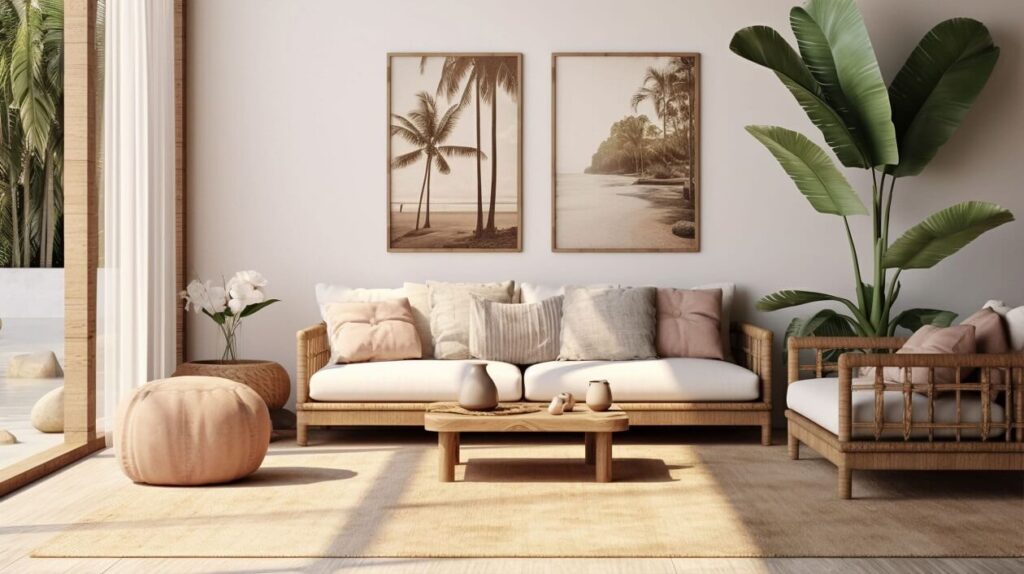
This is one indoor plant styling idea that has transformed my entire home.
Instead of tucking plants into corners as afterthoughts, place them like you would a chair or lamp. Let them define your space. For instance, a large plant next to a sofa anchors the whole room just like a side table would.
Interior designer Hilton Carter often talks about plants as “living furniture,” and he’s right. They guide our movement through the room. Additionally, plants give weight and presence.
If it feels too big, then it’s finally right.
2. Mix leaf shapes, not just plant types
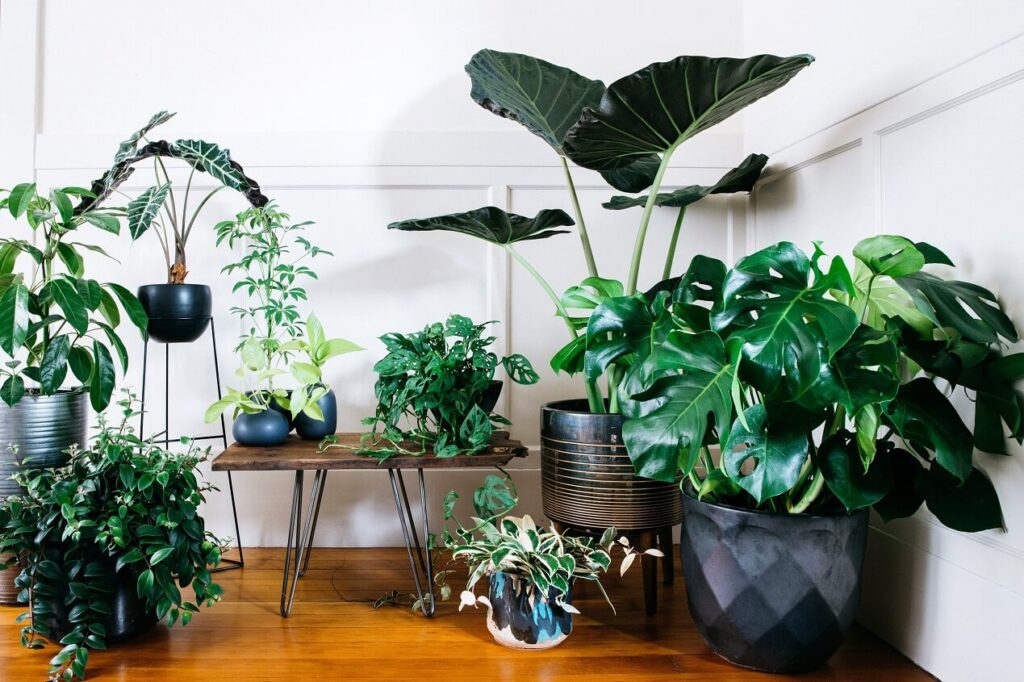
To succeed in styling with indoor plants, avoid choosing the same plants. By this I mean, not all soft, all trailing, or all polite.
Consider using the spiky-leaved and round ones, or the glossy and matte ones. Also, give a mixture of upright and wild a try. You won’t regret it!
A good example is a snake plant next to a fern. Or, a rubber tree near a trailing philodendron. The contrast between the plants creates tension, and this is what makes a space interesting.
The Royal Horticultural Society notes that visual diversity in foliage reduces monotony in designs. Your eyes need variety, just like your brain does.
3. Let one plant steal the spotlight
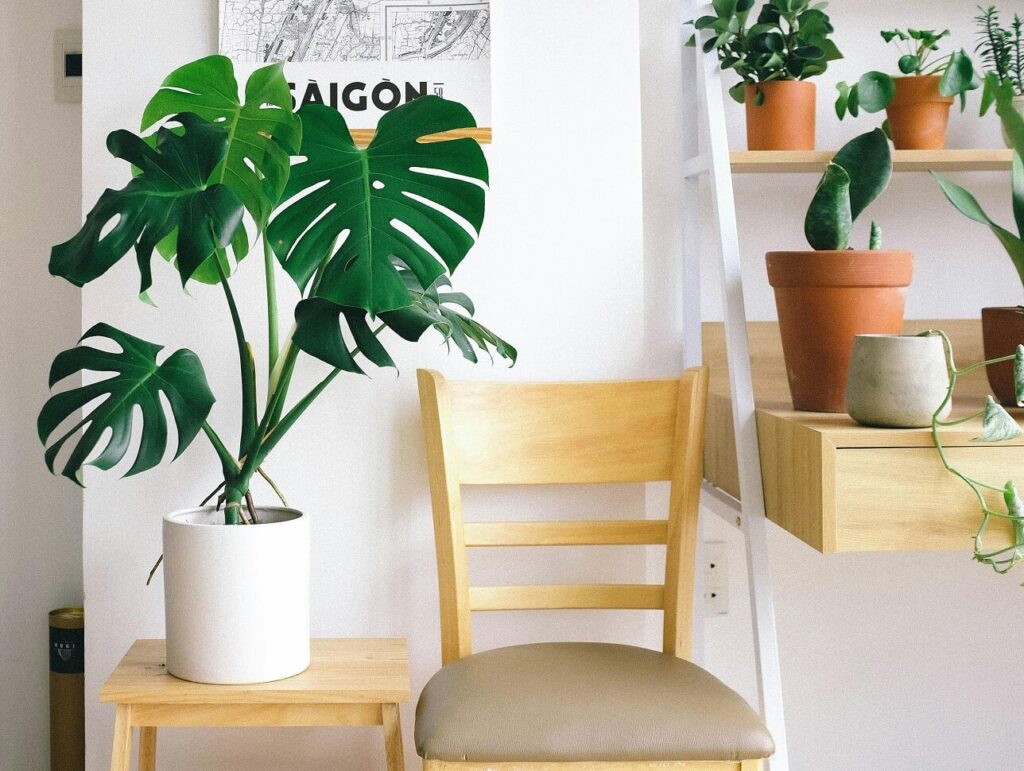
Every room needs a main character. So, pick one plant and let it be dramatic.
It could be a bird of paradise, a monstera, or a tall ficus. Then let the others support it, not compete with it.
This is the same principle used in art galleries and retail spaces where visual hierarchy guides the eye. According to Nielsen Norman Group, people engage more when there’s a clear focal point.
Your plants deserve the same respect as well.
4. Put plants where they “shouldn’t” go
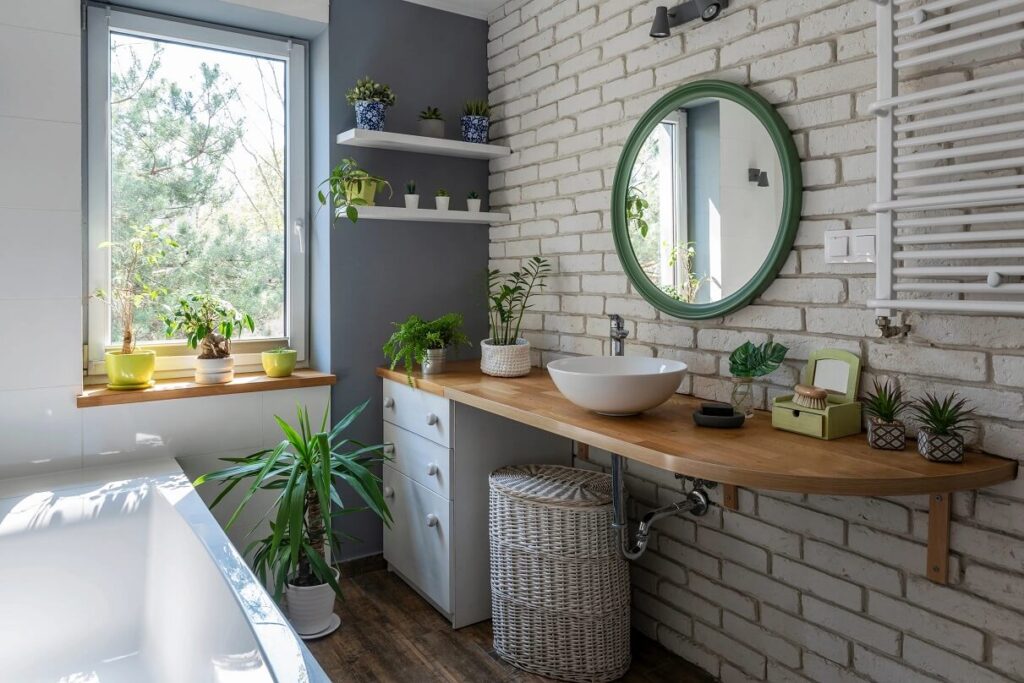
Light matters to plants. Right? That’s why it’s always expected that they belong by the windows.
Does this mean that you can’t break the pattern? Of course you can!
Try a low-light plant in the bathroom or a shelf plant in the hallway. And on the kitchen counter, keep one small plant too.
NASA’s Clean Air Study suggests that common houseplants can survive and even thrive in low-light spaces, as long as you choose wisely.
When plants appear in unexpected places, they feel more alive.
5. Use stands, crates, and stools for height

When everything is on the floor, it feels heavy. And when everything is on the shelves, it looks busy.
Height changes everything.
Consider using a plant stand, an upside-down crate, or even a small stool to give your plant breathing room. This technique also creates layers, which designers use to make rooms feel deeper and intentional.
If your room feels flat, it’s probably because everything is on the same level.
6. Cluster in an odd number
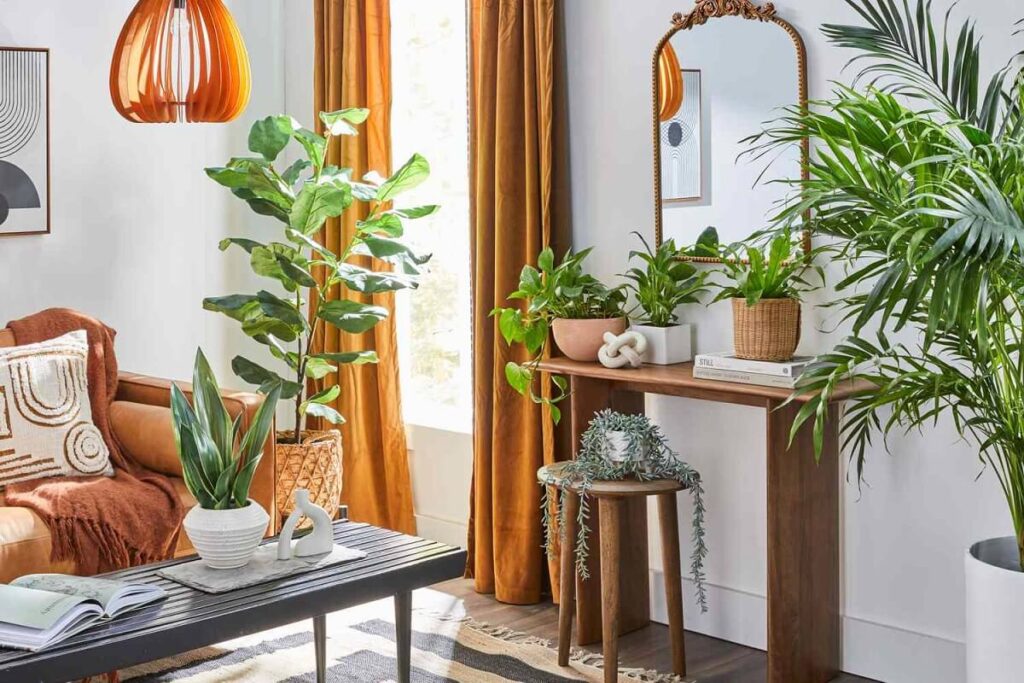
Three always looks better than two. Five always feels more natural than four.
This isn’t magic but psychology. Studies in visual perception suggest that odd-numbered groupings feel more dynamic and less staged.t
Therefore, group your plants in threes or your favorite odd number and in different sizes. Let them overlap a little. It should feel casual, not lined up like soldiers.
7. Match the pot to the room, not the plant

Do you choose your pots based on the plant? If yes, it’s a big mistake.
When styling with indoor plants, consider pots that match your room. Always follow your color palette, textures, and vibe.
Imagine a sleek black pot in a modern space or a woven basket in a cozy one. What about a ceramic pot in a bright kitchen? Yes, these are just a few choices that work perfectly well.
The plants will adapt while the room feels cohesive.
Containers act as visual anchors, and they merge the plants with the rest of the decor.
8. Use one statement planter instead of ten small ones
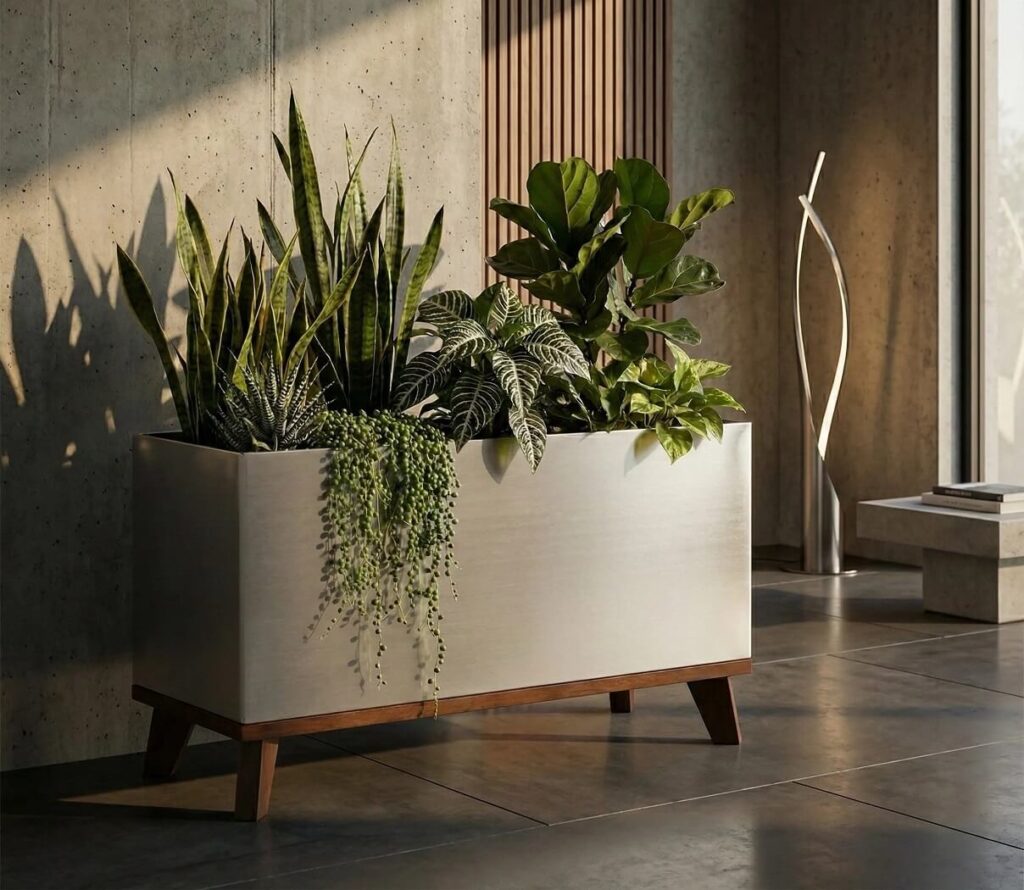
Too many tiny pots can feel cluttered.
Instead, invest in one bold planter. Something that’s both sculptural and textural. Go for something that feels like art even without the plant.
This works because it shifts the focus from quantity to quality. It also keeps your space from looking like a garden store aisle.
Aim: Less noise but more impact.
9. Let plants overlap with art and mirrors
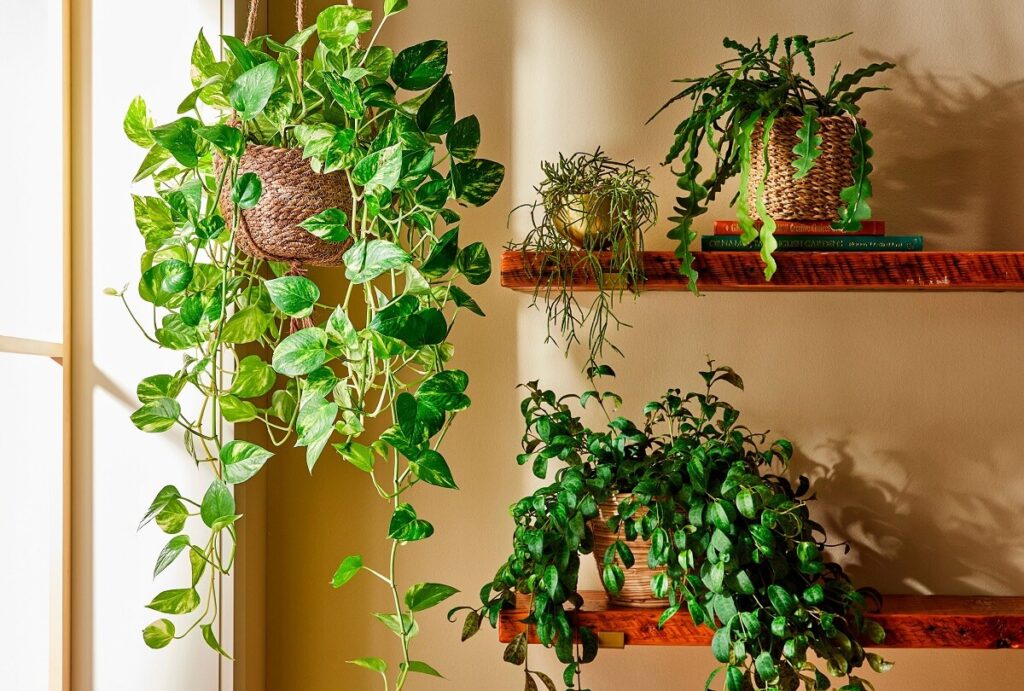
Plants do not need their own corner. Use the layering trick to add depth and make the room feel lived in.
For example, let a leaf cross in front of a mirror or a vine brush the edge of a frame. This is referred to as visual integration. It helps separate elements feel like part of one story, not random pieces in the same room.
It’s subtle, but powerful!
10. Go vertical with intention
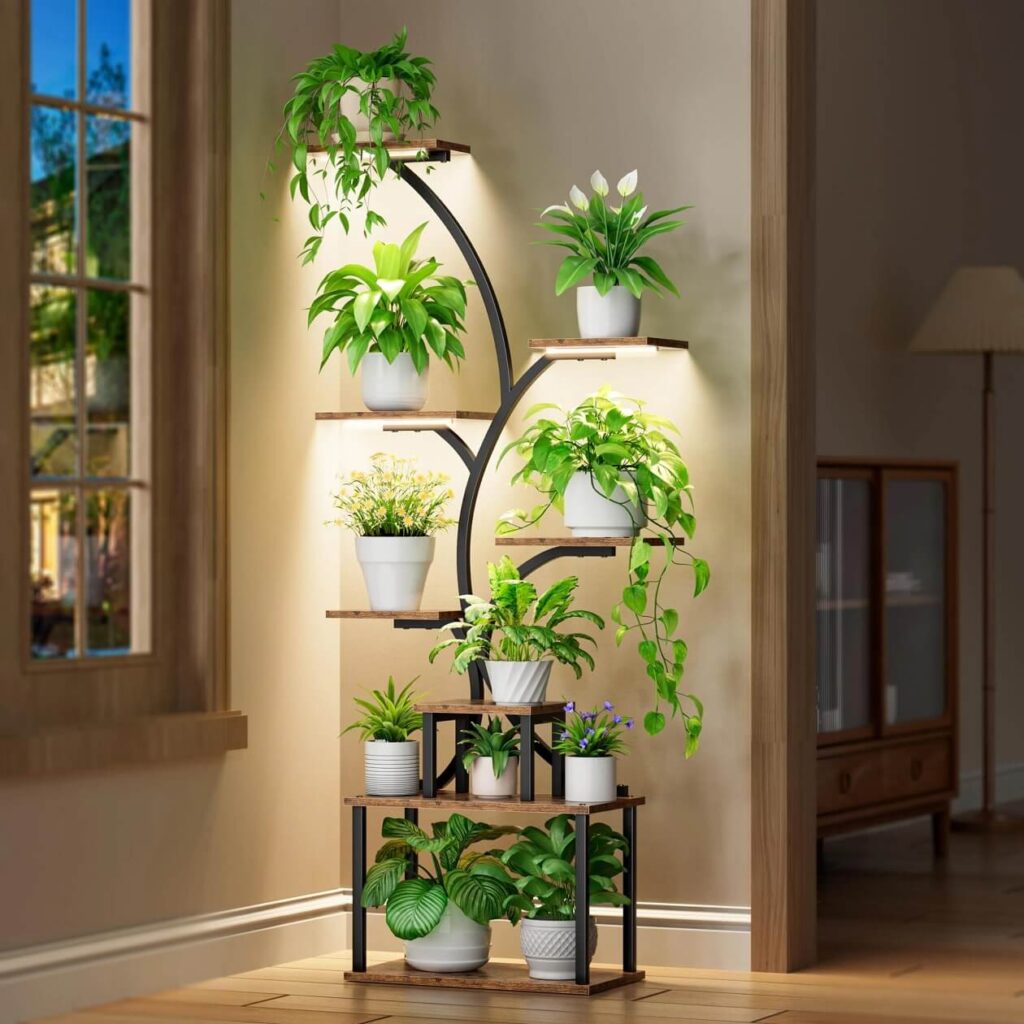
Wall plants can be beautiful, but not when they resemble a trend from time ago.
You don’t need plants all over your wall. This only makes the space feel cluttered rather than neat.
The difference is spacing and restraint. Use one vertical element, such as a wall-mounted planter or a tall plant ladder.
It’s simple, classy, and allows the wall to breathe.
The University of Exeter suggests that greenery improves mood and focus. Just don’t overdo it, or it becomes visual clutter.
11. Use plants to frame views
Place plants on either side of a window, a doorway, or a favorite piece of furniture. It’s like adding curtains made of leaves.
This trick comes from a classical garden design, where trees frame paths and statues. It works indoors too. Your eyes naturally move through the space instead of stopping at the wall.
It feels intentional, not decorative.
12. Style plants with books and objects
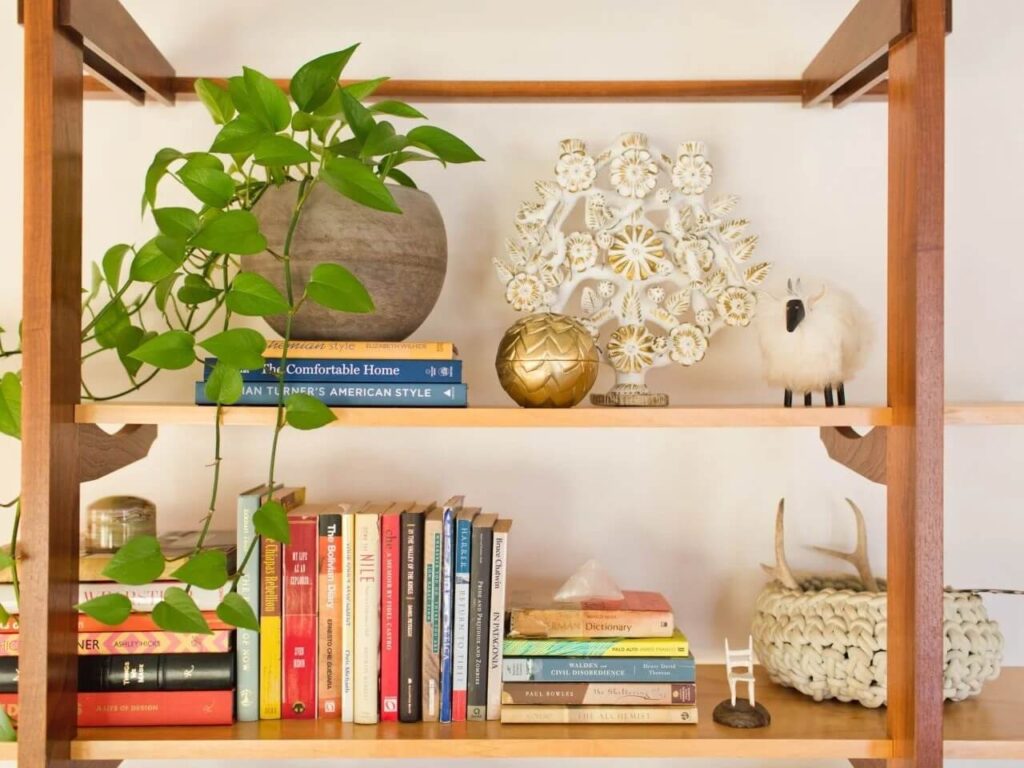
Plants alone can feel lonely.
So, pair them with books, candles, ceramics, or small sculptures. This tells a story. It says, “Someone lives here.”
According to a study published in the Journal of Environmental Psychology, spaces that combine natural and personal elements feel warmer and more welcoming.
Your plants are part of your life.
Why not allow them to show it?
13. Use one unexpected color pot
Mostly, you find plant pots in white, black, or beige. And this is one of the reasons almost all homes feel the same, regardless of how well they incorporate indoor plants.
I hate mine being just like everyone else’s. I bet you hate it too.
I’ve tried a deep green one, a terracotta red, and a soft blue pot. Let me tell you, just one color change and I could feel a quiet surprise in the room. A feeling that wasn’t there before (my personality).
Give it a try, too. You won’t regret it!
Color draws the eye. The Pantone Color Institute notes that even small pops of color can shift the emotional tone of a space.
It’s like lipstick for your living room.
14. Let some plants be messy
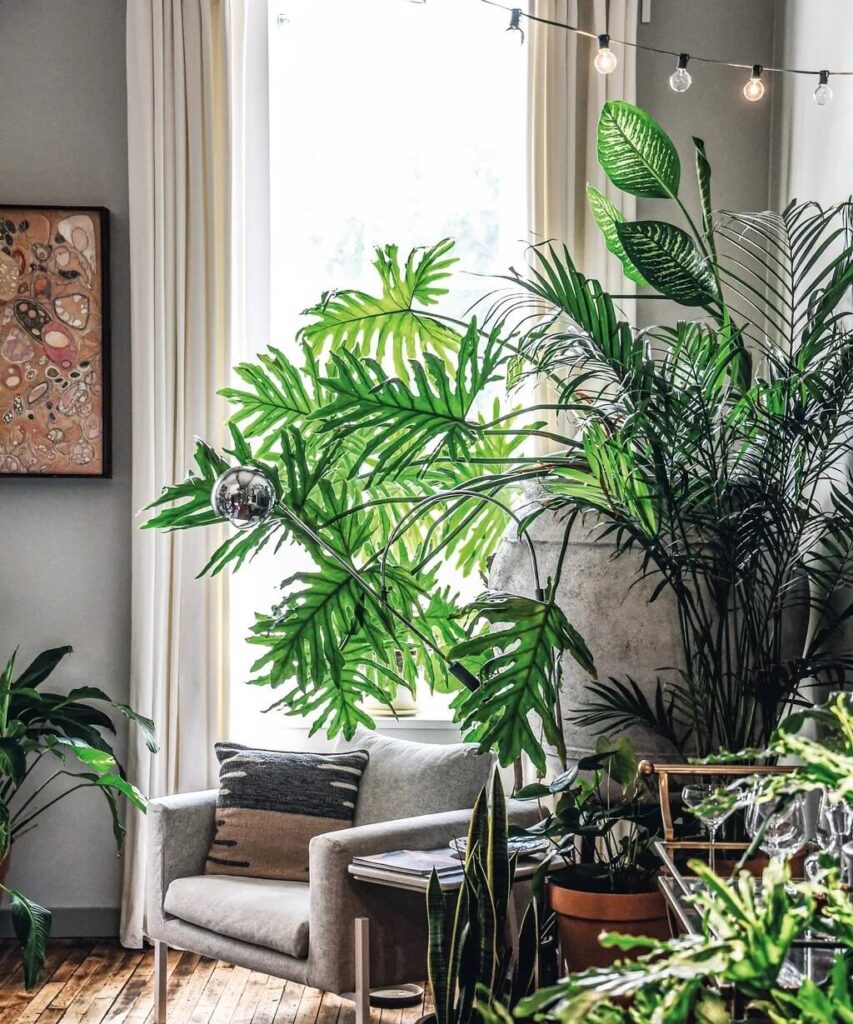
Not every leaf has to behave. Let them be a little messy.
It’s okay to have a wild fern, a trailing vine, a plant that leans instead of standing straight. All the little messes bring movement and softness to a room.
Remember, almost perfect plants feel fake, but a little mess feels real. And real is always more interesting.
Don’t you agree?
15. Rotate your plants like art
Every few months, move them.
You can switch rooms or change the heights. Corner swaps are great too.
This way, your plants stay healthy because of light changes, and your space feels new without spending a penny.
Even museums rotate collections to keep people engaged. Your home deserves the same energy.
I’ve also suggested the same technique in my article on floating shelves styling ideas, a very common with a majority of retail visual merchandisers.
Conclusion
With the 15 Indoor Plant Styling Ideas discussed above, I believe we can all agree that when styled with intention, indoor plants become part of your home’s personality.
They soften edges, add movement, and bring life into your everyday space.
The key isn’t the number of plants you have, but the display matters. Just follow your taste and preference.
Tip: When styling with indoor plants, take babysteps. Always start small with height and texture experiments until you perfect it.