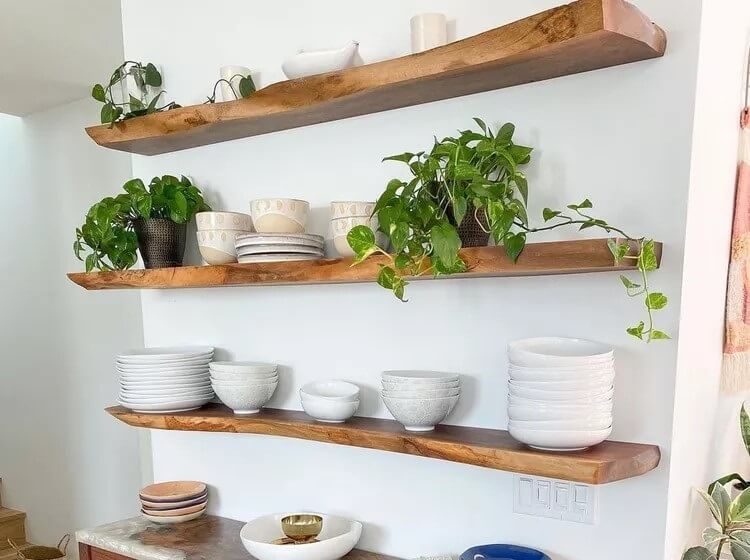
Here’s the thing about floating shelves. They’re everywhere.
Whether it’s in show homes or on Pinterest, you’ll find the latest versions. It’s worth noting that one Airbnb, which clearly had a budget for styling books that no one’s allowed to read.
And yet, when done right, they’re still magical!
The problem isn’t floating shelves themselves. It’s how predictably they’re styled.
I bet you’ve tried the same trio of objects, the same odd number rule, or the same fake plant that looks like it’s begging for water. All this might feel boring to the eyes.
So let’s look at nine floating shelf styling ideas that don’t feel copied and pasted. Ideas that feel lived in, thoughtful, and somewhat unexpected.
This is the floating shelves styling guide I wish I had before I spent afternoons rearranging the same three vases and calling it “done.”
Here are the 9 Floating Shelf Styles That Keep Things Simple
1. Treat shelves like pauses, not spotlights
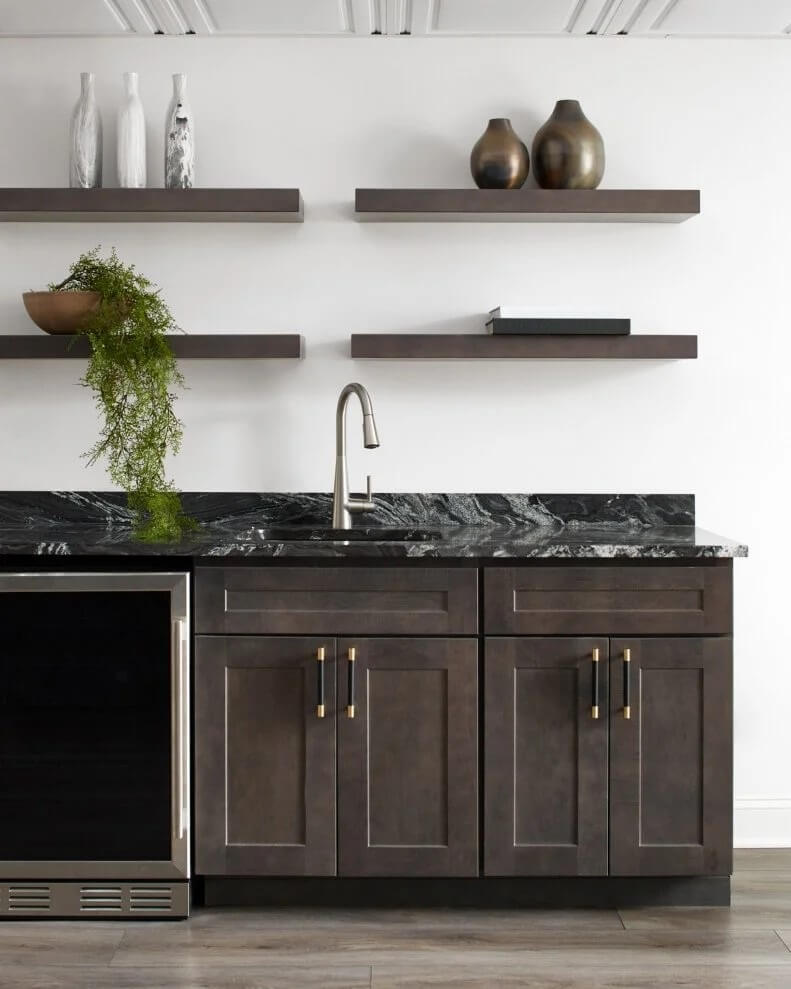
Most people style floating shelves as if they’re the main event. Every inch is filled with objects that each has a role to play.
But some of the best-looking shelves I’ve seen act more like a breather between sentences.
So leave space. And I mean real space. Not negative space as a design buzzword, but space that allows the eye to rest.
Design researchers at the Nielsen Norman Group suggest that visual simplicity enhances comprehension and comfort in physical and digital spaces.
Our brains like clarity, so do our shelves!
If everything is shouting, nothing feels special.
2. Mix useful items with beautiful ones
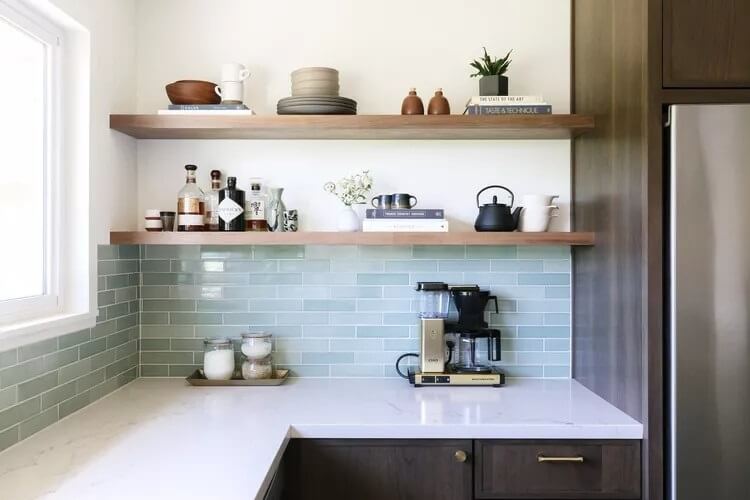
This sounds obvious and almost boring. But it’s where most shelves go wrong.
Pure decor shelves feel staged, while solid storage shelves feel chaotic. Do you want the sweetest spot?
Try overlapping the items.
Every day, delightful objects are worth considering.
For instance, a ceramic mug that you actually use. Or, a cookbook with splatters on the spine.
How about using your woven basket to hold remotes instead of nothing at all? That’s beauty with purpose!
Interior stylist Emily Henderson frequently discusses the concept of “earned mess.” Shelves should look more like ‘life happens there,’ not like they’re waiting for a photoshoot.
3. Let books lie flat sometimes

We’ve been conditioned to stand books upright like obedient little soldiers. But horizontal stacks change everything.
They break the vertical rhythm and create platforms for smaller objects.
Additionally, they feel more casual, like you’ve set them down mid-thought.
There’s also a practical reason why museum curators often stack books and artifacts horizontally. This is to reduce the visual noise and create balance. You could use the same principle at home.
Tip: Horizontal stacks are great for books you love but don’t reread often. They’re present without demanding attention.
4. Use one unexpected material per shelf
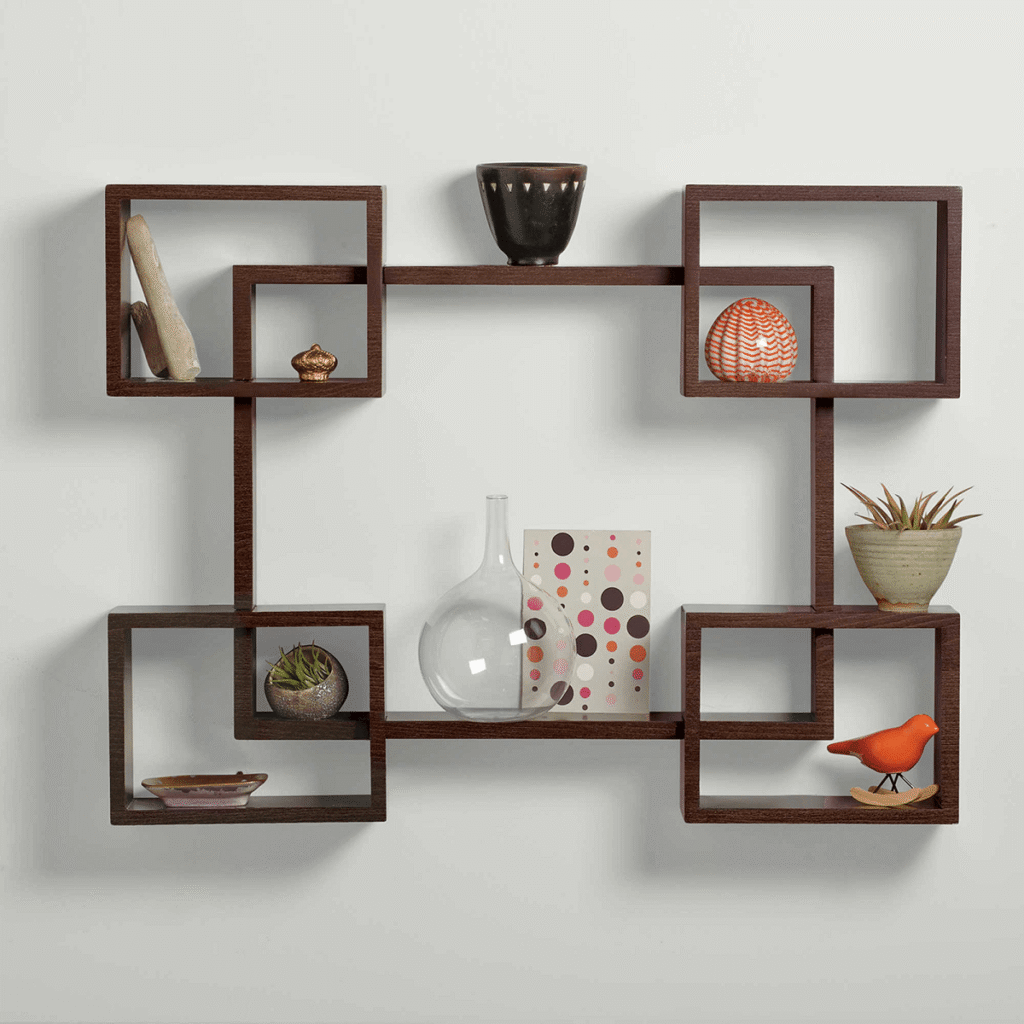
Using one stolen idea from the set designers equals one surprise per scene.
On shelves, that surprise could be material or something slightly off script.
You see that chunk of raw stone or a metal object that’s a bit industrial works wonders. s. Additionally, a glossy glazed piece, positioned next to all that matters, is quite enticing.
Studies on visual interest suggest that contrast keeps viewers engaged much longer. While too much harmony bores easily.
The key is restraint. One unexpected material per shelf is enough. Any more and it starts to feel like a flea market audition.
5. Think in quiet color stories
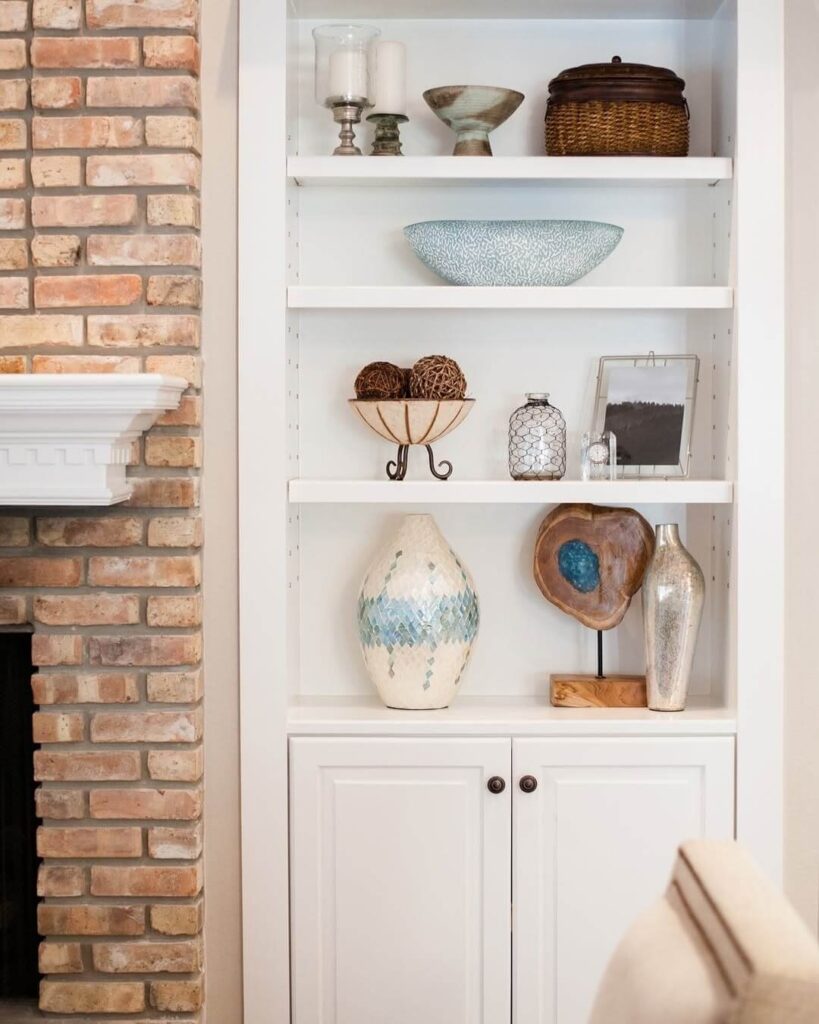
This isn’t about matching everything. It’s about letting colors whisper instead of shouting.
Consider a loose color family, such as earthy neutrals, soft blacks and browns, and muted blues. Then let variation live inside that world.
Color psychologists note that limited palettes reduce cognitive load. In plain language, it just feels calmer.
If you love color, don’t worry. This still works. Just anchor it with a neutral so your shelves don’t feel like they’re arguing with each other.
6. Rotate the pieces instead of overstyling once
One reason floating shelves feel overdone is that people try to get them perfect in one go.
But shelves aren’t paintings. They’re playlists.
Rotate the objects seasonally, swap that piece of art, and change stacks. Additionally, move things around, and often see what amazing setups you can come up with.
A majority of Retail visual merchandisers do this constantly. These small changes keep displays feeling fresh without re-stocking.
Your home deserves the same energy as well.
7. Let art lean, don’t hang everything
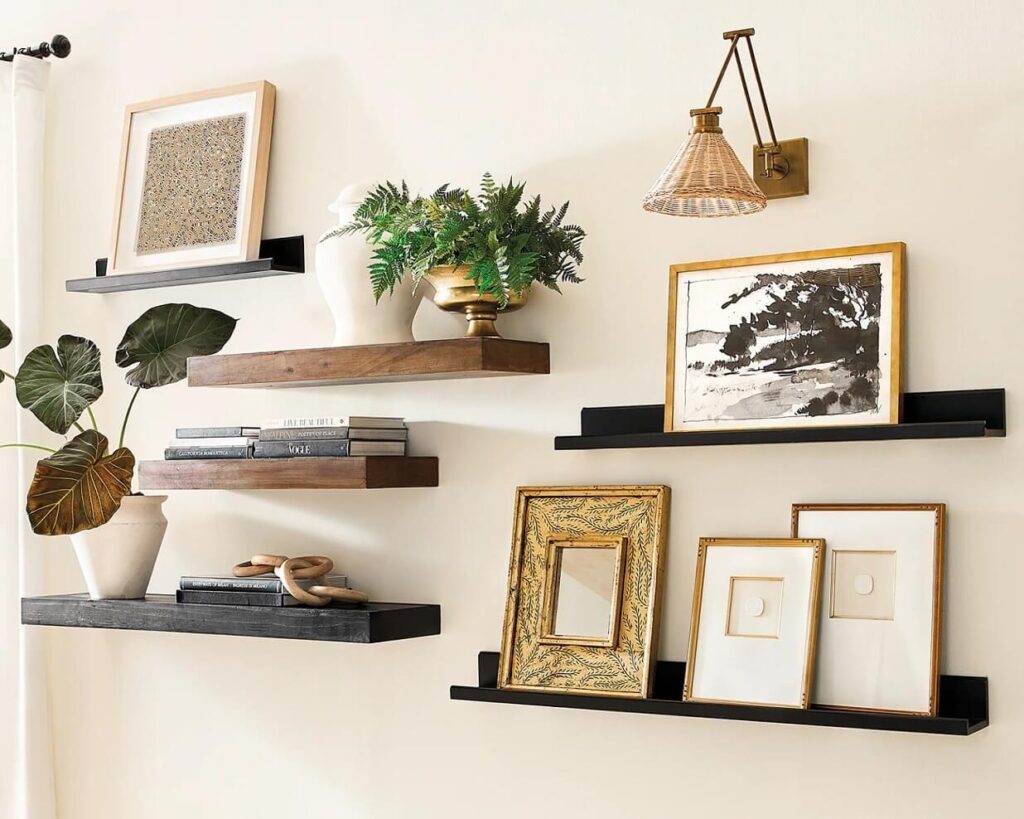
Leaning art on shelves instantly softens the space. It feels relaxed and unfinished in a good way.
This trick comes straight from gallery styling. Curators often lean pieces during installation to test scale and relationships before committing.
At home, you can leave them there.
Layer a smaller piece in front of a larger one. Let frames overlap slightly. It creates depth without clutter.
And yes, crooked is allowed.
8. Use odd groupings, but break the rule intentionally
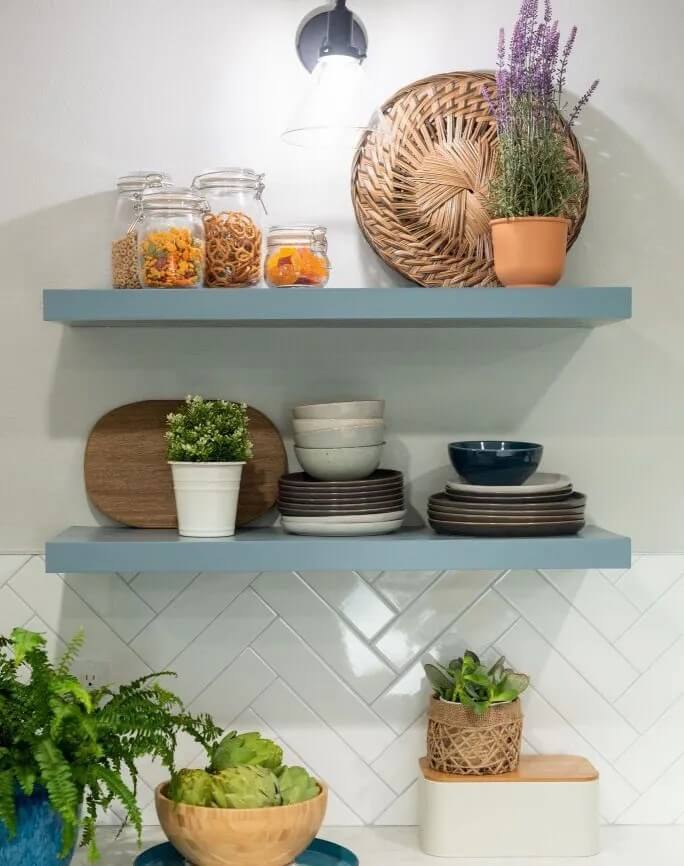
We are all familiar with the rule of three. Odd numbers look better. Design books love it.
But rules only stay interesting when they’re bent.
Try groups of two occasionally. Or five small items that feel collected, not curated.
Gestalt psychology tells us the brain looks for patterns. Breaking them occasionally creates intrigue.
If everything follows the same formula, shelves start to feel like math homework.
9. Tell one small story per shelf
This is my favorite one.
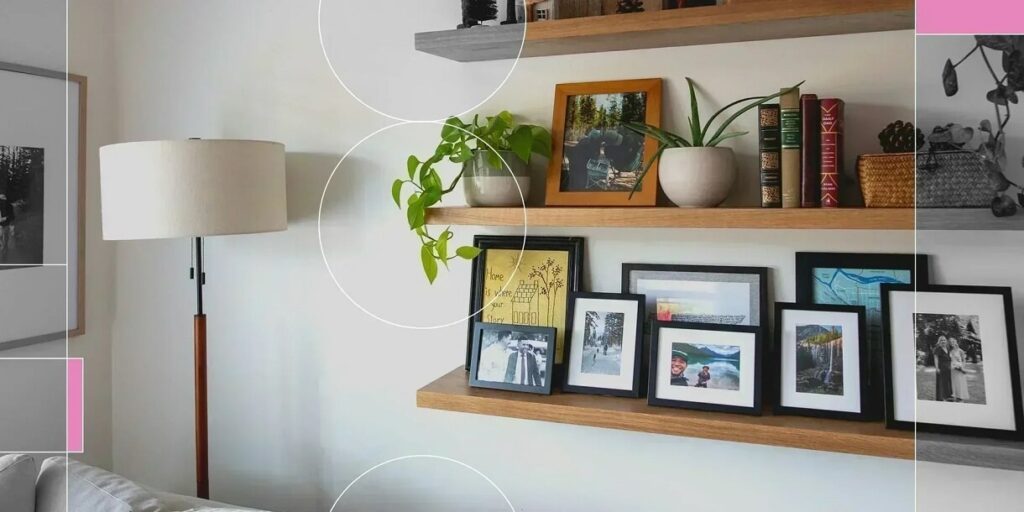
Instead of styling shelves as a whole wall, treat each shelf like a short story.
One shelf might be about travel. Another about cooking. And the other could be about quiet evenings.
This idea is most common in narrative interior design, where spaces reflect personal experiences rather than trends. Designers like Ilse Crawford of Studioilse talk about homes as emotional landscapes, not just visual ones.
When shelves tell stories, they feel honest. And honesty never looks overdone.
Conclusion
Floating shelves don’t need more stuff, but better decisions.
They need room to breathe. A little humor. A little imperfection and the confidence to leave something out.
If your shelves look like they belong to you, not a catalog, you’re doing it right.
And if you rearrange them several times before you’re happy? Welcome to the club.
But be assured that by learning the few tricks I’ve shared above, you’ll be better off today than where you were yesterday.