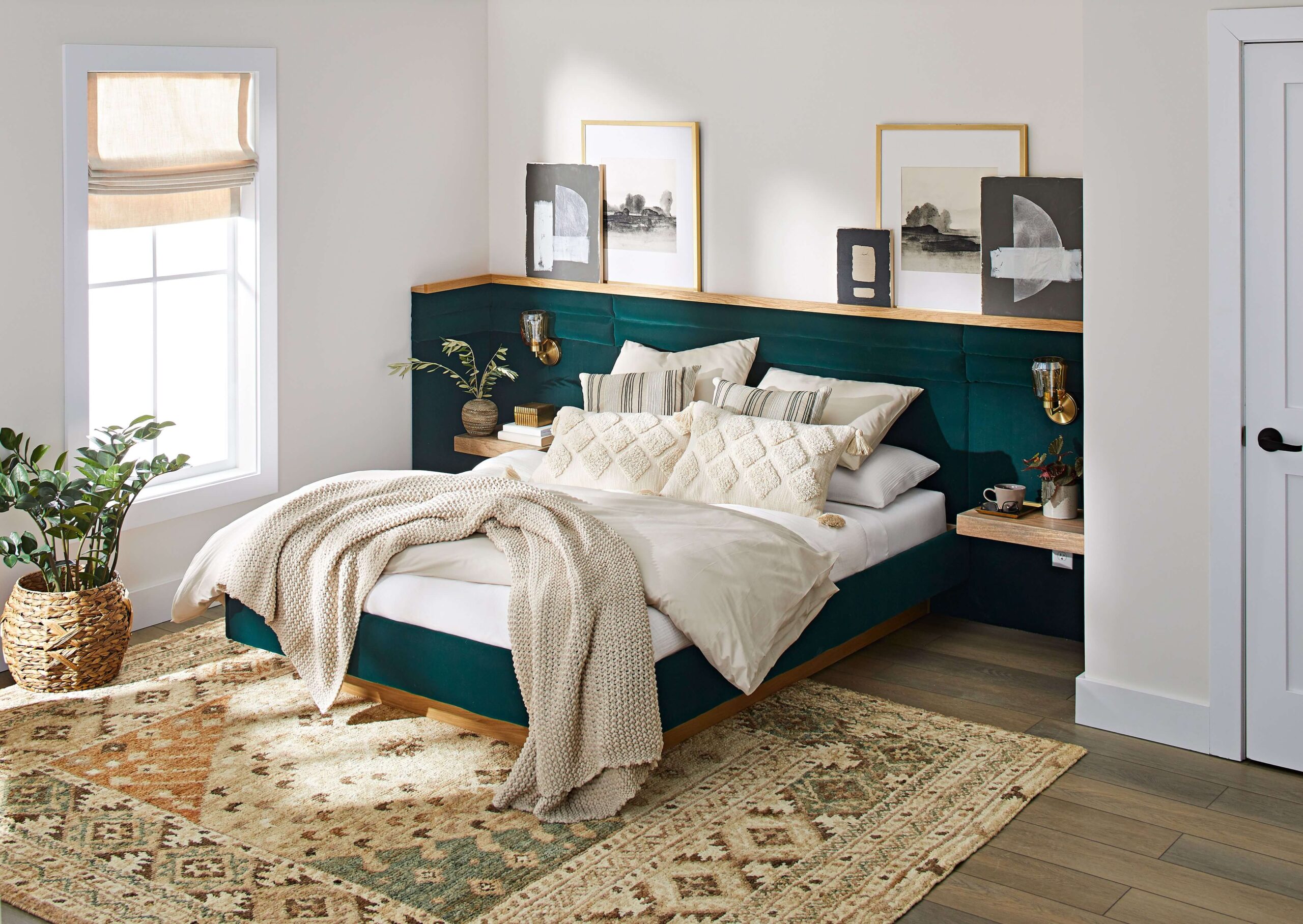
Get ready to fall in love with your bedroom all over again. These 9 Statement DIY Headboard Ideas show how easy it is to turn a plain wall into a stunning focal point.
The headboard is the first thing your eye lands on when you enter your bedroom, and making your own headboard lets you personalize the look and vibe without the designer price tag.
Whether you’re working with a small budget, a basic toolkit, or zero woodworking experience, the 9 Statement DIY Headboard Ideas below will help you achieve what you want.
From reclaimed wood and woven rattan to upholstered panels and painted murals, each of the nine ideas below delivers big personality and a rewarding sense of accomplishment.
With that said, let’s get to business.
9 Statement DIY Headboard Ideas: From Rustic to Modern to Boho
1. Make a Simple Plywood Headboard with Rounded Corners
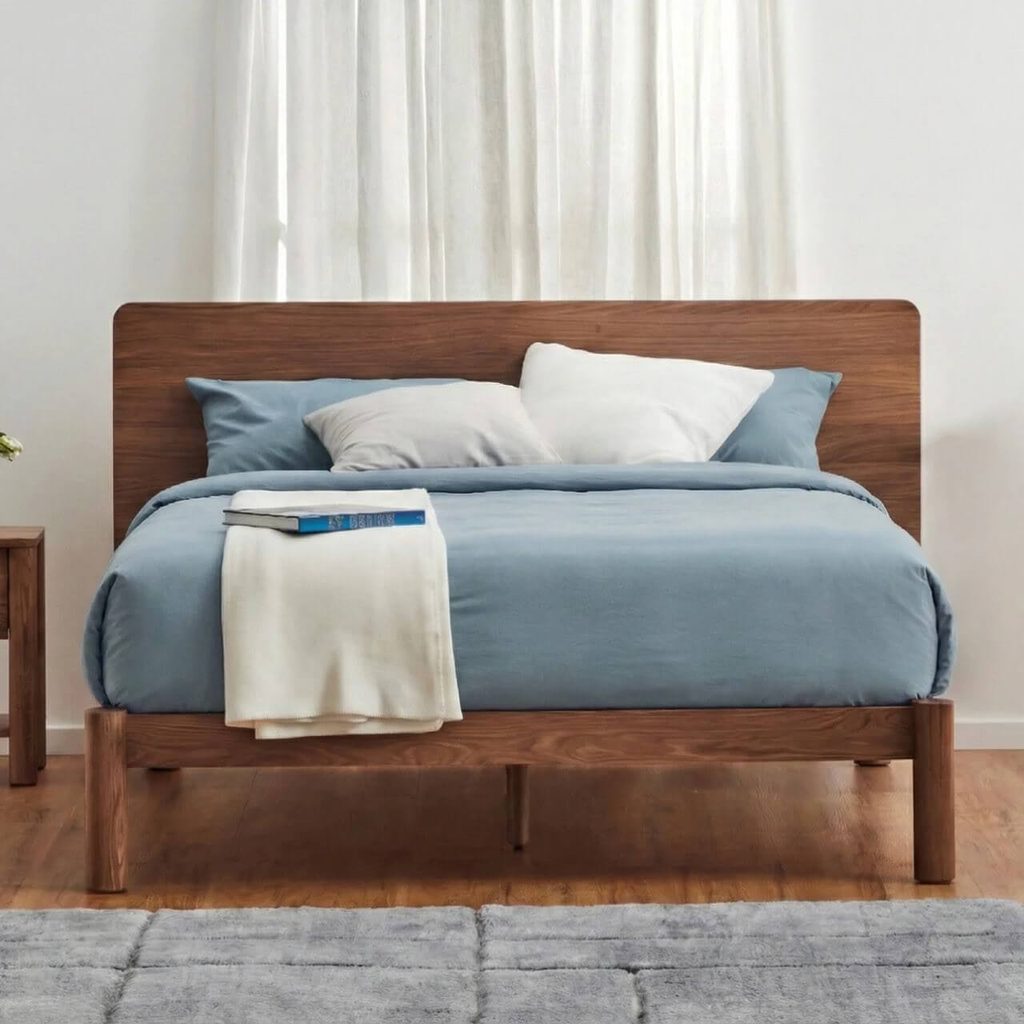
Plywood is one of the easiest materials to turn into a convincing custom headboard. It has a clean, architectural look, and you don’t need a complicated design to make it feel special.
For a softer appearance, cut the upper corners into generous curves. Use a large round object, like a bucket or tray, to mark the shape before cutting. If you don’t have the tools to cut plywood yourself, many hardware stores can make straight cuts for you, or a local carpenter can do it at home.
Once you have cut out the shape, sand every edge thoroughly and decide whether to show the natural wood, stain it, or paint it.
To install, secure the headboard to the wall or attach it to the bed frame, depending on its size and weight. A French cleat is another useful option for securely hanging larger panels on a wall.
2. Create an Upholstered Headboard with a Statement Fabric
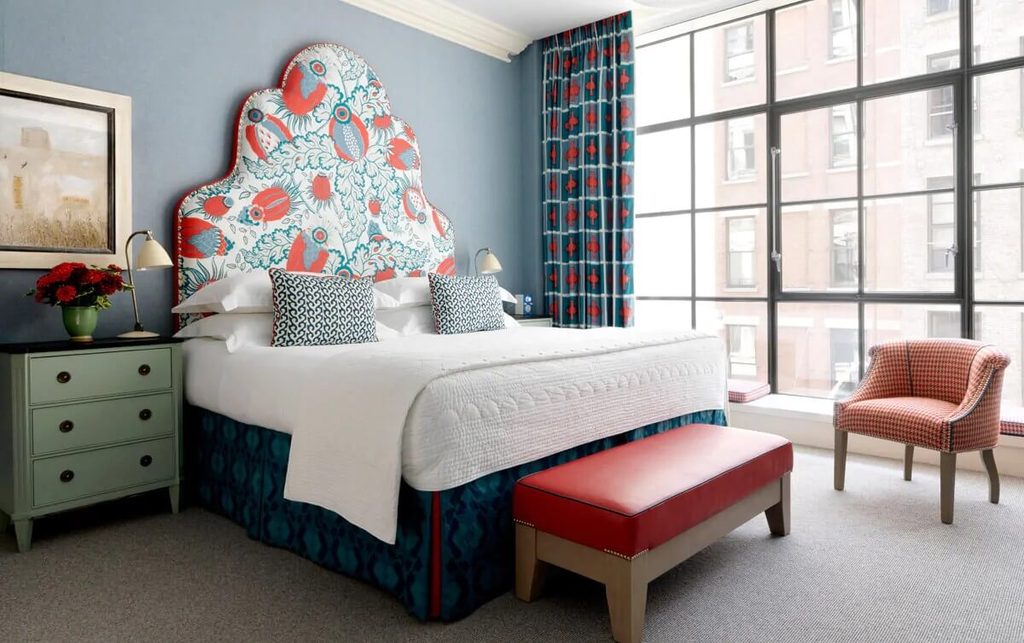
An upholstered headboard can be made with a plywood or MDF backing, foam, batting, and fabric.
To make it, cut the board to size, place upholstery foam over the front, cover it with batting, then pull your chosen fabric tightly around the back and fix it with a staple gun.
For a relaxed, natural look, use a quiet linen, while velvet immediately makes the room feel richer. A bold striped, floral, or geometric pattern, on the other hand, turns the headboard into the focal point.
Read: MDF vs Particle Board: Which is Cheaper or Better?
3. Build a Slatted Wood Headboard
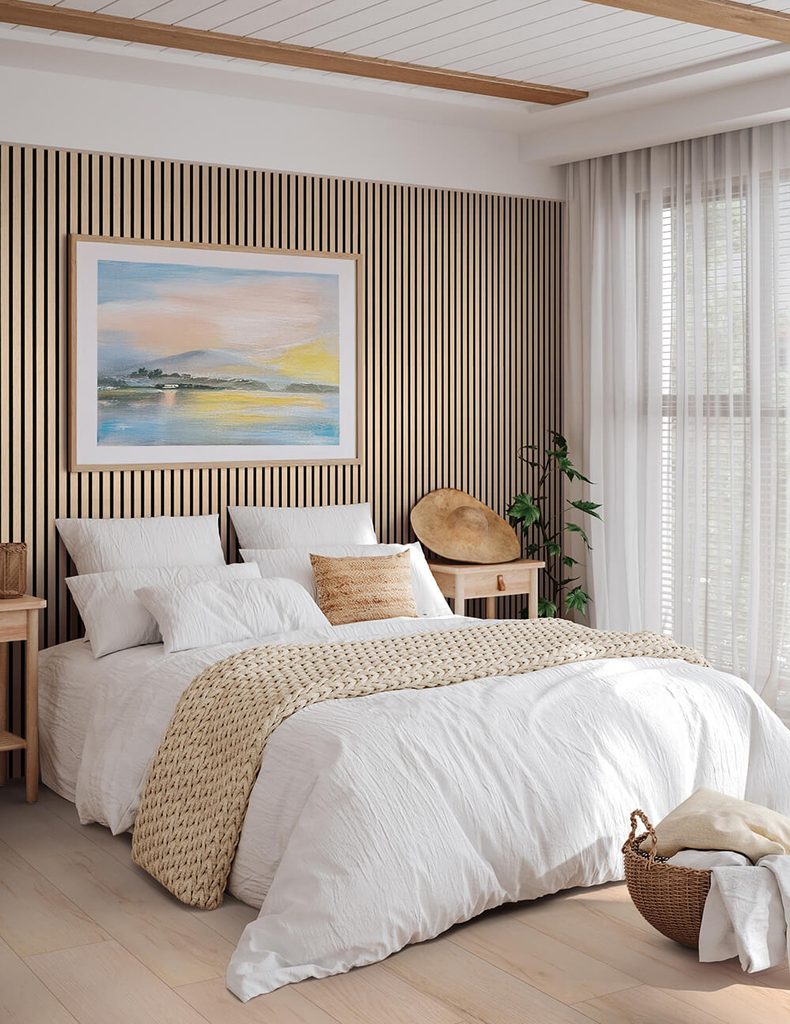
The repeated vertical/horizontal lines in slatted wood add texture while keeping the overall design relatively simple.
Create this look by attaching evenly spaced timber battens to a plywood backing or directly to a wall-mounted frame. Choose a light wood for an airy feel, or stain the timber dark for a moodier, more dramatic vibe.
Spacing matters: tight spacing creates a stronger visual pattern, while wider gaps feel lighter and more relaxed.
A slatted headboard can also extend beyond the mattress width. Letting it run wider behind the bedside tables makes the whole bed zone feel built-in.
Tip: Use repetition to create impact.
Learn: How to Finish Wood Trim for Beginners
4. Try a Painted Arch Headboard
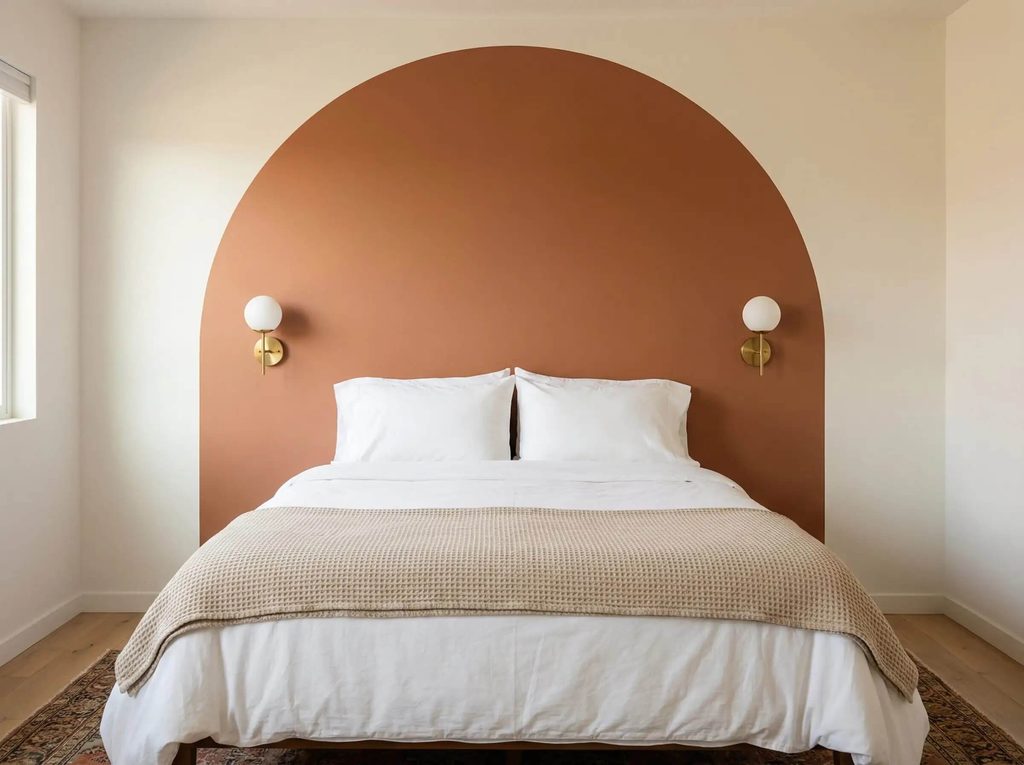
A painted headboard is essentially a large graphic shape behind the bed. An arch is effective because its curved top softens the straight lines of the bed and surrounding furniture.
This is an idea for you if you would rather paint than build.
You can make the arch as wide as the mattress or extend it beyond the sides. You can also take it much higher than a conventional headboard to draw the eye upward and make the ceiling feel taller.
First, create a simple homemade compass for making a large semicircle using a piece of string, a pencil, and a pin or painter’s tape.
Then, color the semicircle to create the desired mood. For instance, terracotta creates warmth, muted sage feels restful, whereas a deep navy or charcoal creates a dramatic backdrop.
This is a low-risk way to experiment with a major bedroom transformation since you can always paint over it.
5. Make a Rattan or Cane Headboard
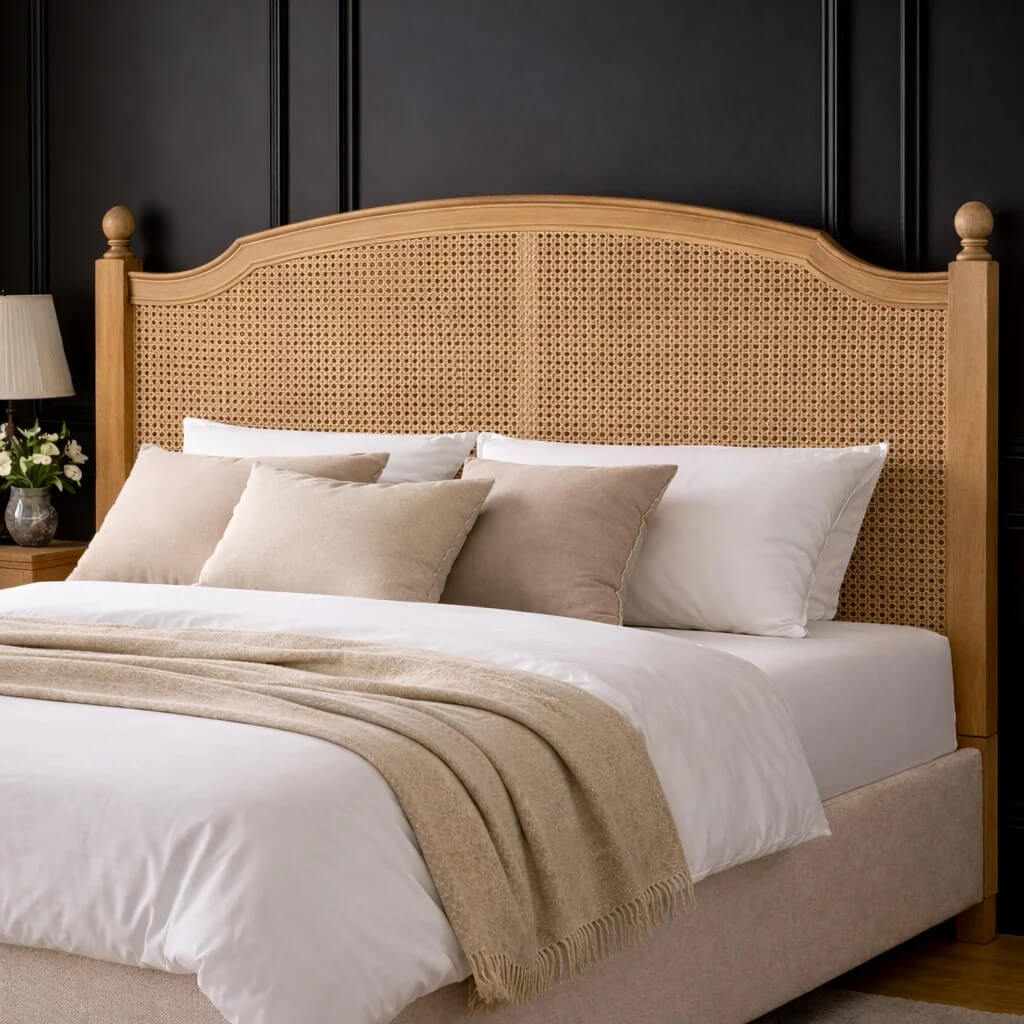
Natural woven materials add texture to a bedroom in a way that paint can’t replicate.
Rattan, cane webbing, and similar materials work especially well in relaxed, coastal, bohemian, and earthy interiors. You can make a timber frame and stretch cane webbing across the center, or adapt an existing wooden headboard if you already have one.
Cane webbing is usually attached to the back of the frame and secured with staples or another suitable fastening method. Depending on the material, soak the cane briefly to make it more flexible and easier to work with, following the manufacturer’s recommendations for that particular product.
Keep the rest of the room relatively tactile but restrained with linen bedding, timber furniture, and woven baskets to echo the headboard without competing with it.
Learn How to Make a Faux Rattan Mirror for Under $20
6. Turn Wall Panels into a Full-Width Headboard
For a bigger architectural effect, consider building the headboard from wall panels.
You can use plywood, MDF, beadboard, moulding or decorative wall panels depending on your budget and the desired design. Rather than stopping at the exact width of the bed, extend the treatment across the entire wall or at least several feet beyond the mattress for a built-in feel and elegance.
If your bedroom has a low ceiling, use vertical paneling to make the ceiling feel taller. Horizontal paneling, on the other hand, makes a narrow room feel visually wider.
Tip: Painting everything in one color makes the treatment feel more architectural. You don’t necessarily need a contrasting panel color to make it feel sophisticated.
7. DIY a Curved Fabric Headboard
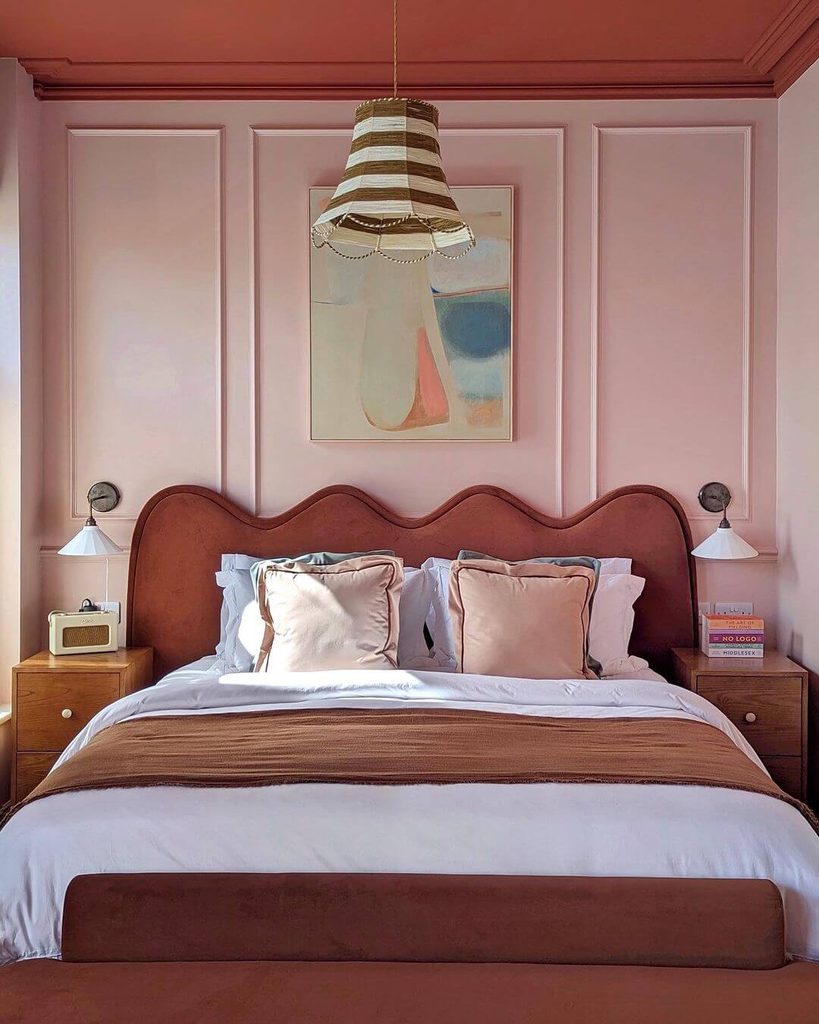
Instead of making a traditional rectangular upholstered panel, create a wide, rounded, or scalloped silhouette. You can make one large curved shape or experiment with two or three connected forms.
The construction is similar to a basic upholstered headboard. Start with a rigid backing, add foam and batting, then wrap the fabric around the shape.
Make small relief cuts on the fabric around tight bends can help it fold more neatly around the back. Keep the cuts on the hidden side and work carefully so you don’t weaken the fabric. This style looks particularly good in a solid fabric because the silhouette becomes the star.
8. Create a Faux Built-In Headboard with Paint and Trim
This is one of the clever options for 9 Statement DIY Headboard Ideas when you want the appearance of custom carpentry without building an entire structure. Use inexpensive trim or moulding to create a large rectangular frame on the wall behind the bed.
Paint the inside of the frame in a contrasting or slightly deeper shade, then position the bed in front of it.
The result is a substantial architectural headboard, although much of it is paint and trim.
For an even more polished effect, add a second smaller frame or use decorative moulding inside the larger shape. Keep the proportions balanced, though.
This idea works especially well in rental-friendly situations when you can use removable moulding or carefully planned, minimally invasive installation methods. Always check your lease and the wall condition before attaching anything.
Check out: 7 No-Drill Decor Ideas for Renters
9. Hang a Large Textile Behind the Bed
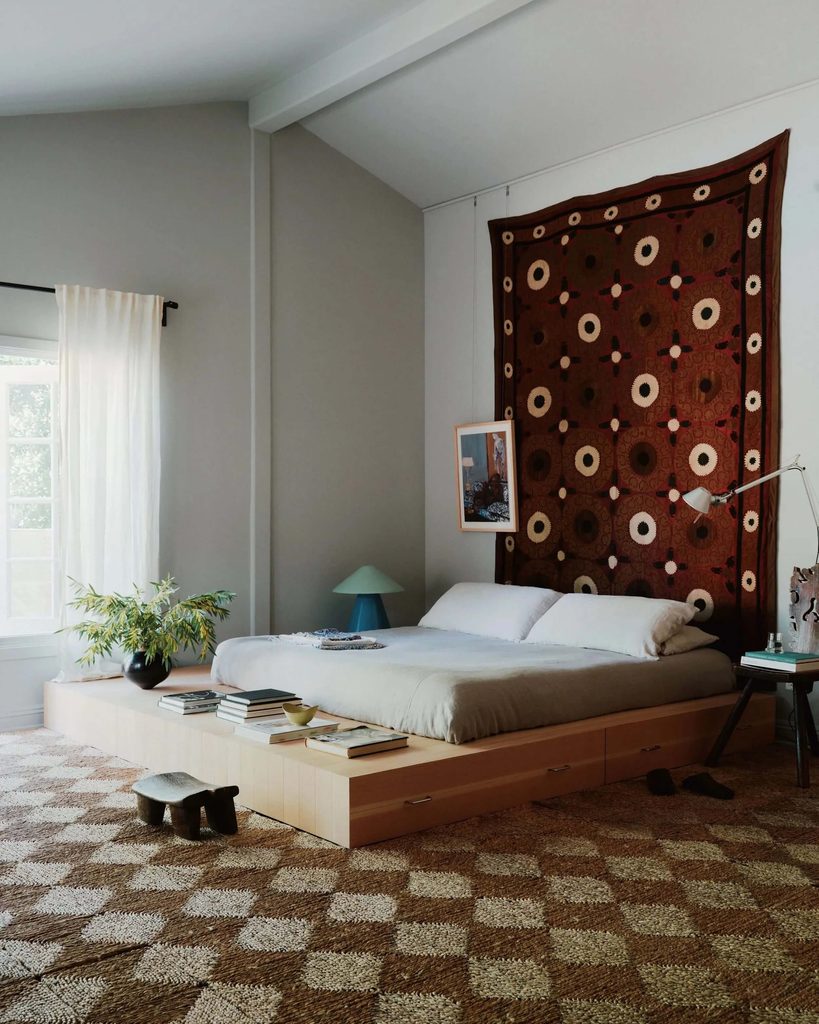
This might be one of the easiest Statement DIY Headboard Ideas on the list, and it can still make a huge impact.
Hang a large rug, woven textile, quilt, or piece of decorative fabric behind the bed to create an instant focal point. It’s useful when you want color or pattern without committing to upholstery or woodworking.
You can hang it from a wooden dowel, curtain rod, or purpose-built textile hanging system. Make sure the hanging method is strong enough for the material and securely attached to the wall.
This is also a great way to introduce pattern into a room. A vintage quilt makes the bedroom feel collected and personal, while a large woven piece creates a calmer, more organic atmosphere.
Conclusion
With these 9 Statement DIY Headboard Ideas on the table, choosing the right DIY headboard can sometimes feel confusing and challenging, especially when you are new to DIY.
But here is how you do it:
Start by looking at what’s in the room before deciding on which idea to choose. For example, if the room has hard surfaces, go for a padded or woven headboard to bring in softness. And if the room already has plenty of fabric, wood, or painted panels, gives you the desired contrast.
Then, consider scale (how big or small your bedroom is).
In this case, a small bedroom usually benefits from a headboard that feels substantial without projecting too far into the room. A large bedroom often handles an oversized design that stretches wider than the bed or rises toward the ceiling better than a small bedroom.
Finally, think about functionality. For instance, if you like reading in bed, a padded headboard is considerably more comfortable than a thin plywood panel. Again, if you’re renting, a painted wall treatment or hanging textile may be more sensible than a permanently installed structure.
Featured image Credit: bhg