
Have you ever walked into a stranger’s home and thought, Wow, what is that smell? Not in a bad way. In that almost involuntary, deeply pleasant way, the kind that makes you want to sit down and never leave.
In an instant, you feel a scent that’s so warm, clean, and personal, like the house itself has a signature. Then you go home, and your place just smells like, well, your place.
The truth is, scent is one of the most powerful and most overlooked elements of a home. Scientists have known for years that smell bypasses the rational brain entirely and hits the limbic system, which is the part of your brain responsible for emotion and memory.
It’s why the smell of, for instance, cinnamon takes some people straight back to their grandmother’s kitchen, or why a certain soap can conjure up an entire summer holiday.
Your home’s scent does the same thing for every person who walks through the door, and that includes you.
Wondering about what it costs you to make your home smell amazing? It’s not much, as you don’t need expensive candles, synthetic sprays, or some elaborate diffuser setup to make your home smell genuinely wonderful.
The natural solutions below are often cheaper, longer-lasting, and honestly more interesting than anything that comes in an aerosol can.
So, let’s take a look at simple ways to make your home smell amazing, naturally.
Get Rid of Bad Smells First (if any)
Before adding anything beautiful, you have to address what’s already there. This is the point where many people reach straight for a scented spray to mask an odor.
This is wrong!
The most stubborn household smells are those that cling to fabric, carpets, and the inside of cupboards. These are usually caused by bacteria, mold, or trapped moisture.
But with baking soda, you have one of the best natural odor absorbers around, because it’s amphoteric (it neutralizes both acidic and alkaline odor compounds rather than just covering them up).
For this to work, put some baking soda in a small, open bowl and place it at the back of your fridge, inside a musty wardrobe, tuck it under a bathroom sink, or in the spot where the smell originates. You should notice some difference within a day or two.
Alternatively, use white vinegar in a bowl and leave it in a room overnight. This absorbs cooking smells, pet odors, or that vague stale smell that accumulates in rooms that don’t get much ventilation. The vinegar smell itself dissipates as it dries, and this might put you off, but you shouldn’t.
By morning, you’ll walk into a noticeably fresher room anyway.
And then there’s ventilation, which is unglamorous yet so important. Open windows on opposite sides of your home for even 10 to 15 minutes a day to create a cross-breeze that will flush out volatile organic compounds, cooking fumes, and built-up moisture.
It’s free, takes no effort, and forms the foundation on which everything else builds.
Learn more about How to Clean Dried Latex Paint Brushes Easily
Simmer Pots: The Oldest Trick and Still the Best

A simmer pot, sometimes called a stove potpourri, is a small pot of water with fragrant ingredients simmering on low heat.
The steam carries the scent through your home in a way that’s remarkably effective, surprisingly quick, and completely customizable.
For a classic winter feel, combine sliced oranges or lemons, a few cinnamon sticks, whole cloves, and a thumb of fresh ginger. It smells like something warm and festive without tipping over into cloying.
For summer, try sliced cucumbers, fresh mint, and a squeeze of lemon, which gives off a clean and almost spa-like scent. Some fresh rosemary with lemon zest and a splash of vanilla extract creates a scent that’s herbal, slightly sweet, and deeply comforting. The key is to top up the water regularly so the pot doesn’t go dry.
The big win with this method is that you can keep the same batch going in the fridge, then bring it back to the simmer when you want the scent again.
Saves you money and time, right?
Consider Using Fresh Herbs and Plants
If you’d rather have something permanent rather than something you have to tend, living plants and fresh herbs are the long game of natural home fragrance.
Not every plant is fragrant enough to make a real difference, though, so it’s worth knowing which ones actually deliver.
For example, Lavender is the obvious and most common one. According to research published in the International Journal of Neuropsychopharmacology, the primary linalool in lavender has measurable calming effects on the nervous system.
Hence, place a pot of lavender on a sunny windowsill in your bedroom to decorate and change the atmosphere.
Another fragrant plant is eucalyptus, which is good in bathrooms. Hang a bundle of fresh eucalyptus branches from your showerhead so that the steam activates the oils as you shower for a clean, slightly medicinal fragrance.
You can source eucalyptus from local florists and grocery stores at a relatively low price.
Additionally, Geranium, jasmine, and gardenia are plants that produce genuine ambient fragrance when placed near windows, especially in warmer months when the heat draws out their oils. Herbs like fresh mint, basil, and lemon balm do the same when you brush against them. Potted mint in a kitchen is both practical and fragrant. It’s one of those rare things in home décor that genuinely earns its place.
Additionally, Geranium, jasmine, and gardenia are all plants that produce genuine ambient fragrance when placed near windows, especially in warmer months when the heat draws out their oils. Herbs like fresh mint, basil, and lemon balm do the same when you brush against them. Potted mint in a kitchen is both practical and fragrant. It’s one of those rare things in home décor that genuinely earns its place.
Essential Oils, Done Right
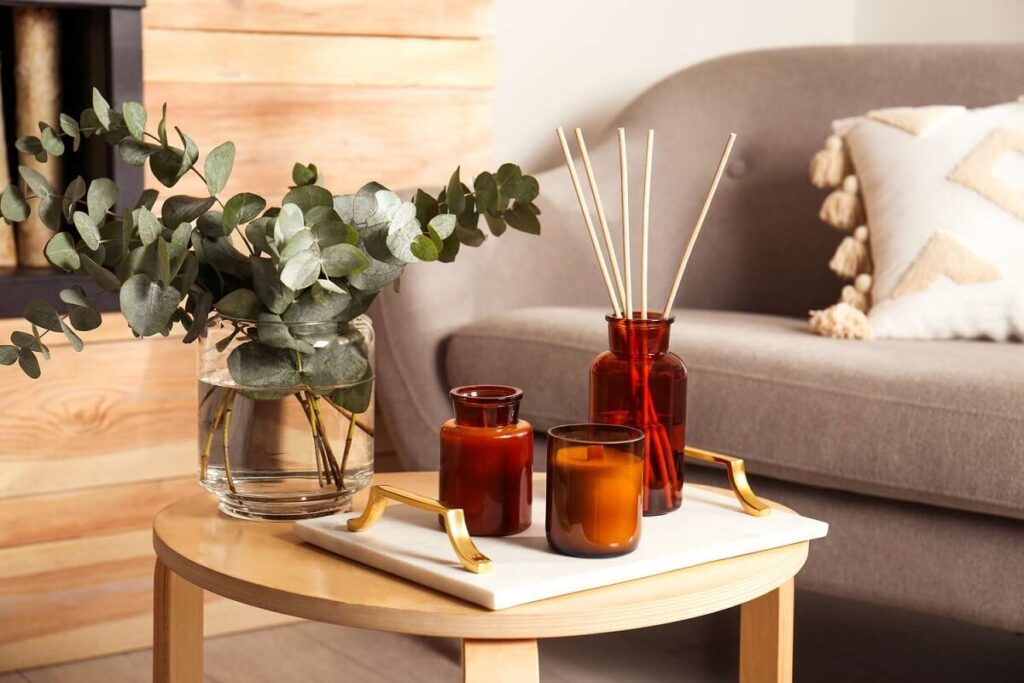
Essential oils have a mixed reputation, due to the way they’re sometimes marketed and also because many people don’t know how to use them effectively.
The most versatile approach is a reed diffuser, which you can absolutely make yourself. All you need is a small glass bottle or jar, a handful of bamboo skewers or wooden reeds, about half a cup of a carrier oil like sweet almond or fractionated coconut oil, a small splash of rubbing alcohol (which thins the mixture so it travels up the reeds more easily), and several drops of your chosen essential oil.
Flip the reeds once every few days. The scent is subtle and continuous, which is generally more pleasant than intense bursts from a spray.
If you love different scent combinations, try cedar wood and bergamot for a warm, woody quality that works beautifully in living rooms.
On the other hand, lemon and peppermint mix brings out a crisp, energizing vibe for kitchens and home offices. Clary sage and lavender are deeply calming for bedrooms. Moreover, ylang ylang, frankincense, and a drop of sandalwood have an exotic smell, like a high-end hotel lobby.
Pro note: Essential oils vary in quality, and the difference between a cheap oil and a good one is significant. Brands like Plant Therapy and Eden Botanicals are widely trusted for purity and transparency about sourcing.
The Magic of Scenting Specific Spots
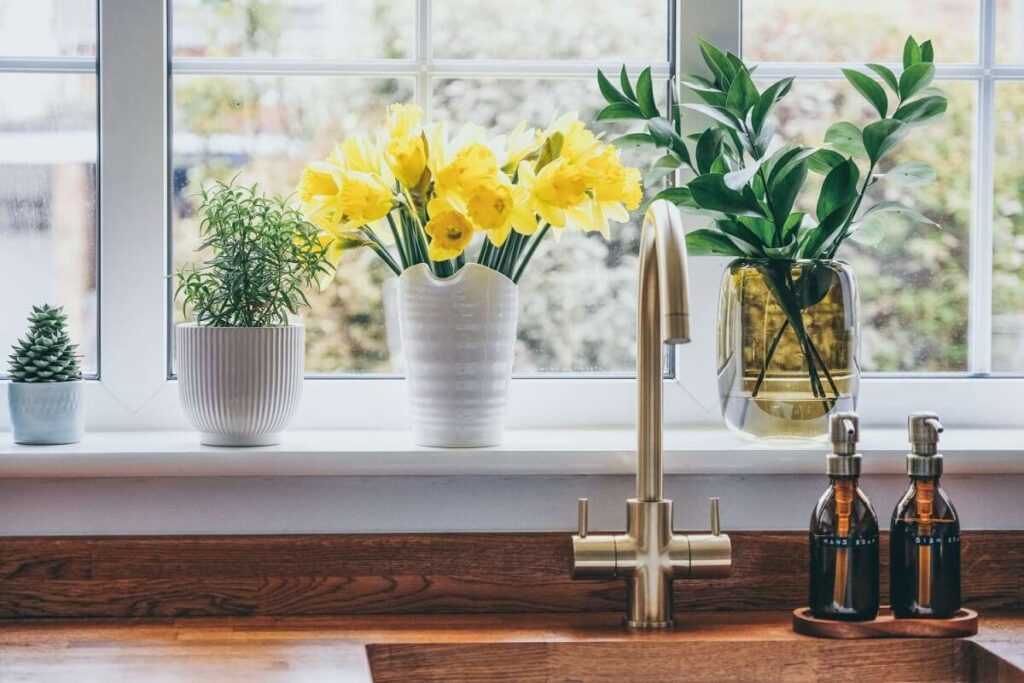
One of the most effective and least talked-about strategies is to scent specific functional spots in your home rather than trying to fragrance entire rooms all at once. The places where air moves, where heat is generated, or where people linger most tend to distribute scent most efficiently.
You can tuck a few dried lavender sachets or a bar of unwrapped soap between your sheets and towels, and every time you pull something out, you get a soft release of fragrance.
Another trick is to put a single drop of essential oil on a cool, switched-off lightbulb. Once the bulb is lit, the oil will diffuse gently as the bulb heats up. This is an old trick that genuinely works.
During the cooler months, use your radiator as a natural diffuser. Place a small bowl of water with a few drops of essential oil on a warm radiator to humidify the room slightly while releasing the scent. In very dry climates or during winter when central heating desiccates the air, this is genuinely useful beyond just the fragrance.
Did you know that your vacuum cleaner can become a scent delivery system? Place a few drops of essential oil on a cotton ball and drop it into the bag or canister before you vacuum. As you move through the rooms, the machine disperses the fragrance gently through the air behind it.
Use Scented Candles and Wax Melts

If you love candles, it’s worth knowing that not all candles are equal from a natural standpoint. Paraffin wax candles, which make up the majority of what’s sold in shops, are derived from petroleum and release small amounts of benzene and toluene when burned.
The amounts are generally considered low-risk in well-ventilated spaces but if you’re trying to keep things natural, beeswax or soy candles with cotton wicks and genuine essential oils are the better option.
Beeswax candles are particularly interesting because they release negative ions when they burn, which can help neutralize dust, allergens, and pollutants in the air. It’s a genuinely lovely side effect for something you’re burning purely for atmosphere.
You’ll find beeswax candles at farmers’ markets, health food shops, or online from small producers.
If you love DIY projects, soy wax is the most forgiving and widely available option. Start by melting it down and let it cool before adding your chosen essential oil (cool it to about 55°C).
Then pour into a jar and add a cotton wick held in place by two pencils balanced across the top of the jar. The result is a candle you’ve made yourself, with exactly the scent you want and readily available materials.
The Kitchen: Your Most Powerful Scent Zone
Of all the rooms in a home, the kitchen is both the biggest culprit of bad smells and the biggest opportunity for good ones.
Citrus is the kitchen’s best friend. Simmer lemon or orange peels in a small pot of water for ten minutes after cooking to neutralize lingering food odors, particularly strong ones like fish, onion, or garlic. Save the peels in the freezer specifically for this purpose so that nothing is wasted, and you always have them on hand.
Apart from this, whole spices including cardamom, fennel seeds, star anise, and coriander seeds all produce complex, warming scents when gently heated. You don’t have to be cooking anything. Sometimes warm spices in a pan for a couple of minutes simply because you want the house to smell that way.
Use coffee grounds to absorb odors in the fridge. Used grounds placed in a small bowl pull ambient smells from the air as well.
A Note on Fragrance and Wellbeing
It’s worth pausing for a moment on why all of this actually matters beyond just having a nice-smelling house. Scent has a documented relationship with mood, stress levels, and even cognitive performance.
A 2014 study from Wheeling Jesuit University found that participants exposed to peppermint scent reported higher alertness, better memory, and improved processing speed compared to those who weren’t.
Another study from the Smell and Taste Treatment and Research Foundation in Chicago found that lavender and vanilla were among the scents people associated most strongly with feelings of relaxation and happiness.
Conclusion
This article aimed to share with you different ways you can make your home smell amazing, naturally, and I hope that I have been of help.
The scent you return to every day shapes how you feel about the place you live. It becomes part of how you decompress, unwind, and whether your home actually feels like a sanctuary or just a place where your stuff lives.
Natural scents come from real ingredients, tend to feel warmer and more grounded than synthetic ones because our brains have been recognizing orange peel, cinnamon and fresh herbs for years.
Start with one thing, then move to the next. It could be a simmer pot in your kitchen, a sachet in your linen cupboard, or a bunch of eucalyptus in the shower.
Remember, the smallest sensory changes often have the most effect on how a home feels. And feeling good in your own home is, when you think about it, one of the best investments you can make.