How to clean stove grates easily at home is one of those kitchen questions that comes up the moment you notice baked-on grease that doesn’t budge no matter how hard you scrub.
It’s a common frustration for the majority of homeowners. Those grimy grates have a way of turning a quick wipe-down into a dreaded chore, with the same patches of grime clinging on like they’ve become part of the metal.
The good news is that getting your grates clean doesn’t have to mean toxic fumes, raw knuckles, or an entire afternoon lost to the sink. With a few simple household staples and a little patience, even the stubborn buildup can go from crusted to gleaming with surprisingly little effort.
Whether you’re dealing with gas burner grates coated in years of cooking residue or you want an easy weekly routine to keep them looking new, this guide walks through the most effective, low-effort methods to get the job done at home.
So, let’s look at various ways to clean stove grates easily at home with readily available ingredients.
From Grimy to Gleaming: How to Clean Stove Grates the Easy Way
Use the Everyday Soak Method

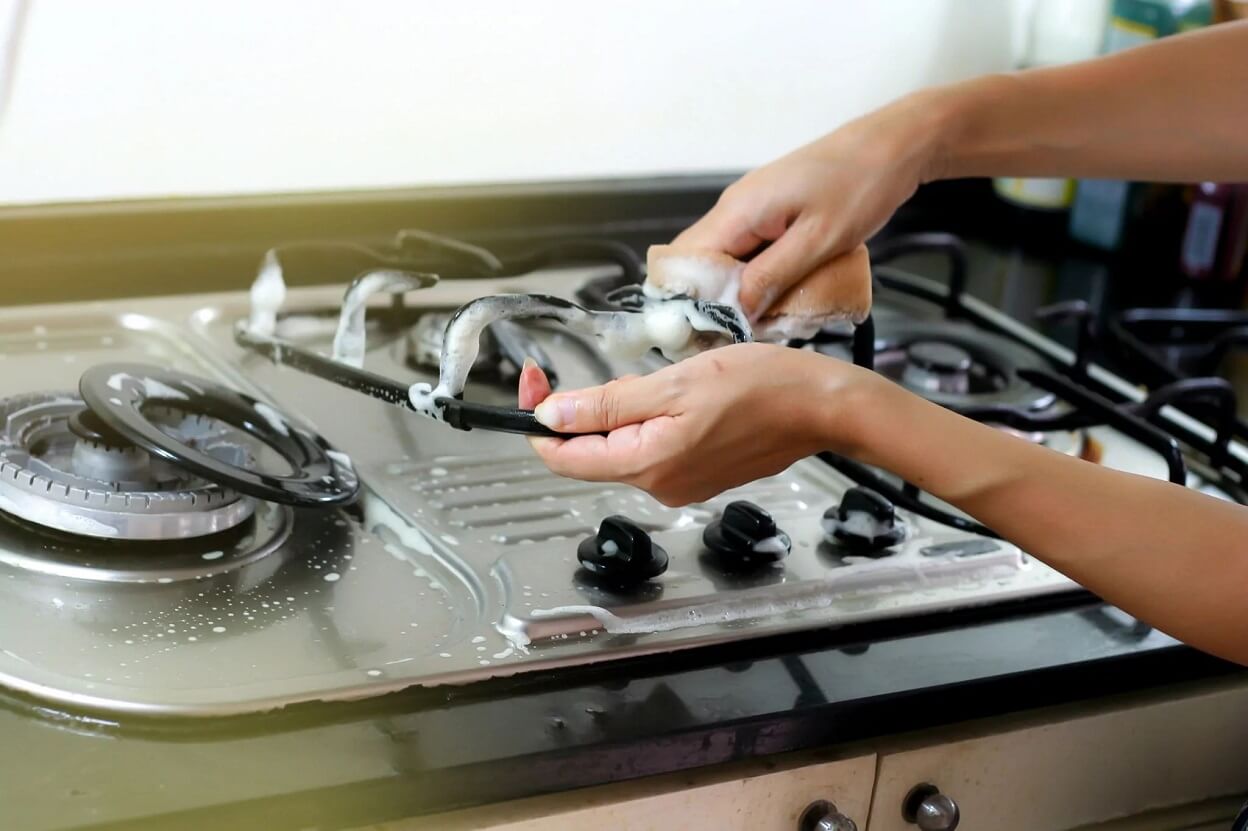
Start by pulling your grates off the stove. Fill your sink or a large basin with hot water, and add a generous squeeze of dish soap. Let the grates soak for at least twenty minutes, or longer if you can manage it.
Alternatively, leave them in overnight for a much easier scrub the next morning.
The hot, soapy water softens fresh to moderately stubborn grease, loosening its grip on the metal so a sponge or a soft brush can actually do its job.
Once they’ve had their soak, scrub each grate under running water, paying attention to the underside, which tends to get neglected. Dry them completely before putting them back, especially if they’re cast iron. This way, you avoid rust.
This simple soak should be your go-to move if you plan to clean every other week. It won’t touch the deep, baked-on stuff, but it’ll stop your grates from ever reaching that point in the first place.
Pro Note: According to Whirlpool Corporation, a renowned American multinational manufacturer and marketer of home appliances, you shouldn’t soak cast iron grates unless they’re coated or seasoned, which is a useful caveat to add alongside the soak method.
Soap and Water Not Cutting it? Try Baking Soda Paste
For grates that have clearly seen a few too many unattended baking and pasta days, baking soda is your next move. Mix it with enough water to form a thick paste, something close to the texture of toothpaste.
Spread that paste generously over every inch of the grate, working it into the grooves where grease accumulates. And let the paste sit for at least 30 minutes.
Baking soda is mildly abrasive and alkaline, which means it works on two fronts at once. It physically helps lift grime, and it chemically breaks down some of that hardened grease.
After it’s had time to work, scrub with a stiff brush, focusing extra effort on any dark, shiny patches. Rinse well and dry thoroughly.
This method is cheap. Furthermore, baking soda is a common pantry staple that handles a surprising amount of grime without any harsh chemicals.
Learn more baking soda uses in How to Fix Brown Spots on Ceiling with No Leak
The Ammonia Bag Trick, for the Truly Crusted Grates
If you’ve got grates that look like they’ve been through a small fire, there’s a method that cleaning veterans swear by, and it sounds almost too lazy to work.
Begin by placing each grate in a large zip-top bag. Then pour in about a quarter cup of ammonia, seal it tight, and leave it outside or in a well-ventilated garage overnight.
The fumes from the ammonia do all the heavy lifting while you sleep. By morning, that thick, blackened crust will have softened to the point where it wipes away with minimal scrubbing, sometimes peeling off in satisfying sheets.
This method usually feels like a cheat, honestly, since you barely lift a finger compared to other methods.
A few important notes here, though.
- Ammonia fumes are strong, so this should be done in a well-ventilated space, never in a closed kitchen.
- Do not, under any circumstances, mix ammonia with bleach or any bleach-based cleaner; the combination creates a toxic gas called chloramines. According to an article on the Washington State Department of Health, these gases are harmful to humans. They pose health problems such as coughing, nausea, chest pains, watery eyes, irritation to the throat, nose, and eyes, wheezing, Pneumonia, and fluid in the lungs.
- Keep the bags away from kids and pets, and wear gloves when you open them up the next day.
The Boiling Pot Method
If you’d rather skip the chemicals altogether, there’s a stovetop method that uses nothing but water, dish soap, and a bit of patience.
Grab a pot large enough to fit your grates, or work in batches if your pot is on the smaller side. Fill it with water, add a few squirts of dish soap, and bring it to a gentle simmer with the grates submerged.
Let them simmer for about fifteen to twenty minutes. The combination of heat and soapy water reactivates the grease, essentially undoing the same cooking process that hardened it in the first place. Once they’ve simmered, pull the grates out carefully with tongs, since they’ll be hot, and scrub while they’re still warm.
This method takes a bit more hands-on effort than the soak or the ammonia bag, but it’s satisfying in its own way, almost like reversing the very chemistry that made the mess. Plus, there’s nothing in this method you wouldn’t already have under your sink.
Vinegar and Baking Soda Combo
If you are the kind that wants something natural with a bit of fizziness and satisfying chemistry, vinegar and baking soda make a solid team.
To achieve this, sprinkle baking soda across the grates, then spray or pour white vinegar over the top. It’ll bubble up immediately, and that reaction helps loosen grime from the surface. Let it sit for at least fifteen minutes to work, then scrub with a brush and rinse thoroughly.
This combination won’t out-muscle the ammonia method on old buildup, but for moderate grease, it does a good job, and it smells a whole lot better than ammonia fumes.
Cast Iron Grates Need a Little Extra Attention
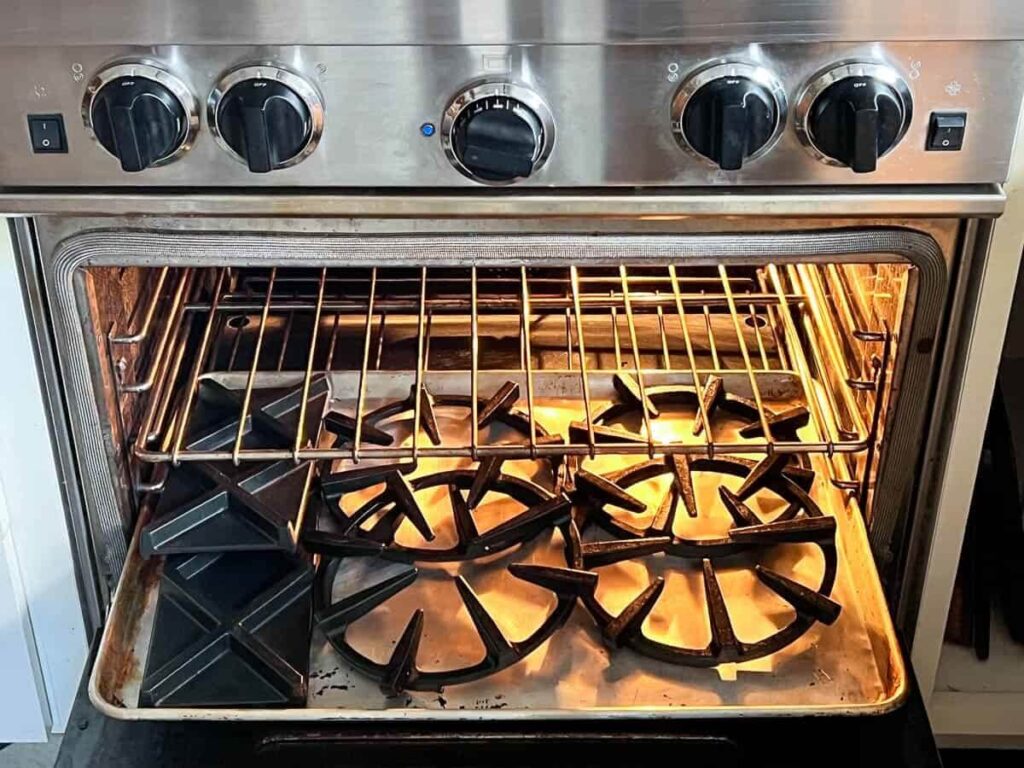
If your grates are cast iron, which most gas stove grates are, there’s one more step that enhances the cleanliness, effectiveness, and appearance of your grates.
After any wet cleaning method, dry your grates completely, ideally with a towel followed by a few minutes on a low oven setting to evaporate any hidden moisture. Once dry, rub a thin layer of cooking oil or seasoning oil across the surface with a paper towel.
By doing this, you rebuild the protective polymerized layer in a thin, controlled way that protects the metal instead of trapping food residues, and your grates remain shiny for longer.
Conclusion
When I decided to write this article, the aim was to share with you several Ways to Clean Stove Grates Easily at Home, something that I feel I have achieved.
I have taken you through reasons why your grates might look dirty even after a regular wipe. We have seen that grate cleaning is about understanding what’s actually happening on that metal surface and using the right approach to tackle the challenge.
Remember, grease builds up slowly through a chemical process that you can control early enough. Build habits such as cleaning your grates regularly, right after cooking, while they’re still slightly warm. This takes maybe two minutes and prevents 90% of the buildup that’s hard to clean.
Also, keep a damp cloth or a designated grease rag near your stove, and get in the habit of a quick wipe after dinner, just like you would a kitchen countertop.
Featured Image Credit: Cleanzen