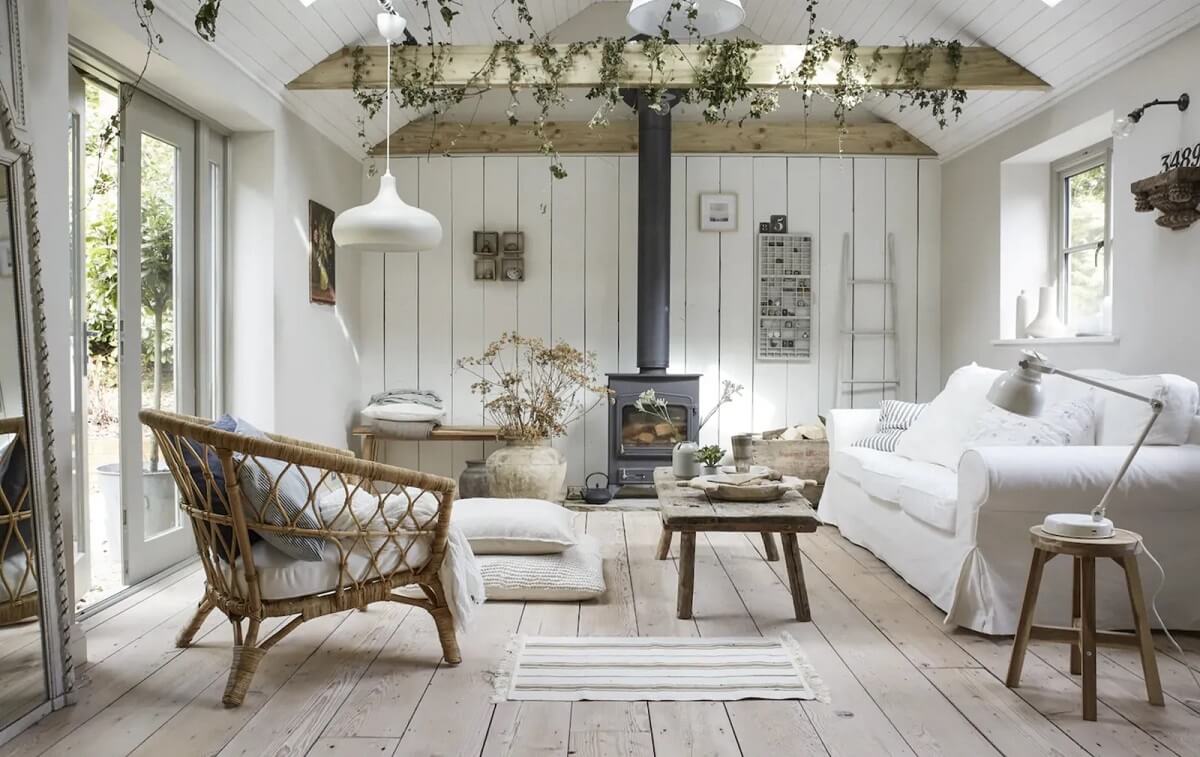
Ever walked into a hotel room and instantly felt your shoulders drop as the air feels softer and the room feels calmer? It’s the different mood lighting ideas that hotels use to create the ambiance that the furniture rarely achieves.
Lighting shapes how a room feels more than almost anything else. According to the American Lighting Association, layered lighting (a mix of different light sources) makes spaces feel warmer, more comfortable, and more functional.
In other words, if your room feels flat or stressful, most likely it’s all about the lighting.
The good news is that creating a retreat-like atmosphere at home doesn’t require a renovation or expensive fixtures. A few thoughtful lighting choices can completely transform the mood.
In this article, I have shared some ideas that work surprisingly well, given your preferences.
Simple Mood Lighting Ideas That Instantly Make Your Home Feel Cozy
Ditch Bright Lights for Warm Ones

Bright white lighting, often labeled as “cool white” or “daylight,” can feel clinical. It’s great for offices and garages. Not so great for relaxing in your living room at night.
Warm bulbs, that are approximately 2700K to 3000K on the Kelvin scale, mimic the glow of sunset and candlelight. According to research from the Lighting Research Center at Rensselaer Polytechnic Institute, warmer light encourages relaxation and signals the body to wind down.
It might seem like a tiny change, but the effect is quite fulfilling. The aftermath of the swap is a softer, calmer, and more welcoming home.
Use Lamps Instead of Overhead Lights

Overhead lighting tends to flatten a room. It’s like taking a photo with flash, and everything becomes harsh and slightly uncomfortable.
Table and floor lamps, on the other hand, create pockets of light instead. Suddenly, the room has depth as the shadows appear in the corners. This space appears layered and cozy.
If we follow the suggestions of most interior designers, a room should have three to five light sources. You can have a floor lamp by a chair, a small lamp on a side table, and another one near the bookshelf. Each light adds atmosphere.
Think of it like candles at a dinner table, where one candle is nice, while three or four (several) feel magical.
Add Dimmers Whenever Possible
Dimmers might be the most underrated mood-lighting tool in a home, yet they are so functional.
With a dimmer, you can shift the same light fixture from bright and functional to soft and relaxing. Additionally, you can lower the lights to create the perfect mood for a dinner party.
And when it’s reading time, you turn them up slightly.
Studies in environmental psychology suggest that lower lighting levels encourage relaxation and social intimacy. That’s why restaurants and lounges rarely use bright lighting.
Installing a dimmer switch is usually inexpensive, yet the difference is dramatic.
Try LED Light Strips for Hidden Glow
Soft hidden lighting feels luxurious. And surprisingly, it’s easy to recreate at home.
Place LED light strips behind headboards, under shelves, or along the backs of TVs. This way, instead of seeing the light source, you see a gentle glow bouncing off the wall.
This technique is known as indirect lighting, and designers love it because it softens shadows and reduces glare.
With LED light strips, the room feels like a boutique hotel suite.
Bring in Candles, Whether Real or Flameless
Few things change a room faster than candlelight.
The flicker of a flame creates tiny movements of light that our brains interpret as calming. Anthropologists believe humans associate firelight with safety and gathering, which may explain why it feels so comforting.
Even a few candles on a coffee table can transform a room’s mood from tense to calm and warm.
While some people dislike open flames because they feel nervous, there are flameless LED candles that are a solid alternative for those with open light nervousness.
Many flicker convincingly and can be set on timers.
Use String Lights in Unexpected Places
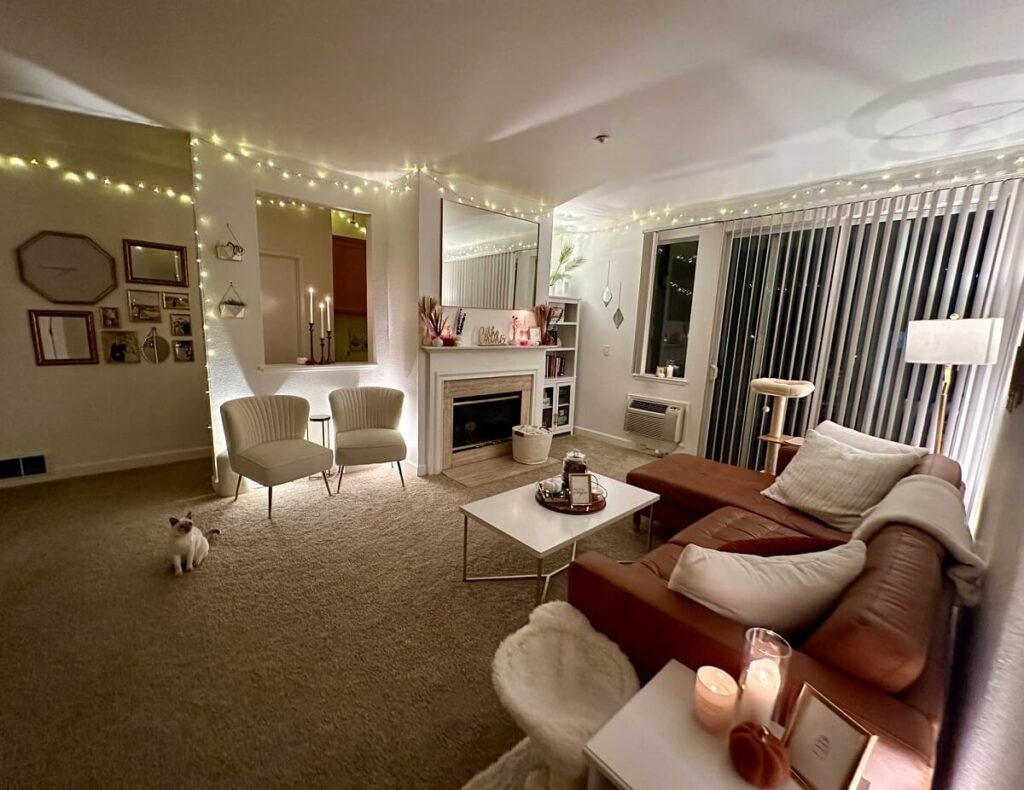
String lights aren’t just for holidays or dorm rooms. They have several other uses in your home as well.
You can drape them across a headboard or tuck them along a bookshelf. Additionally, place them in a glass jar on a side table to bring out a playful yet surprisingly calming effect.
Psychologists studying lighting environments have found that small points of warm light can make spaces feel more intimate and welcoming. It’s like bringing a little constellation indoors.
Highlight One Cozy Corner
Did you know that not every part of a room needs to glow? In fact, leaving some areas darker can make a space feel more peaceful.
Therefore, choose one corner and turn it into a small retreat to bring a pause to the room. Consider having a chair, a blanket, and a lamp with a warm bulb to bring some coziness to the room.
And that’s it. Target achieved!
Now the room has a destination, a place that quietly says, sit here, slow down, breathe.
Use Paper or Fabric Lampshades

One fact about bare bulbs is that they tend to feel harsh. But with lampshades, the harsh light feels soft and diffused.
Materials such as linen, cotton, and rice paper scatter light gently around the room. This scattering of light makes the glow warmer and more forgiving.
This technique has been embraced in many Japanese designs for centuries. For example, the famous Akari lanterns by artist Isamu Noguchi were created to produce a calm, diffused glow.
It’s the lighting equivalent of soft background music.
Light the Walls, Not Just the Room
Here’s a designer’s most-used trick: aim the light towards the walls, not straight into the room.
They use wall sconces, picture lights, or even a lamp placed close to a wall to create a wash of light that spreads across the surface.
This technique makes rooms feel larger and calmer because the light spreads evenly. It also reduces harsh shadows.
In other words, the room feels balanced.
Bring Lighting Down to Eye Level
Most ceiling lights sit far above our heads; that distance can make a space feel impersonal. In that case, allow your lighting to sit closer to eye level for a more human and intimate feel.
Think about bedside lamps, small table lamps, or lanterns on the floor. Suddenly, the room feels like it’s glowing from within instead of being blasted from above.
That subtle shift changes everything.
Use Lighting to Create a Night Ritual
Mood lighting works best when it becomes part of a routine.
In the evening, try turning off the overhead lights and switching on only the lamps. Additionally, light a candle and dim the living room lights. This signals the brain that the day is coming to a close.
The Harvard Medical School Division of Sleep Medicine notes that softer evening lighting supports the body’s natural circadian rhythm by reducing stimulation. Softer light enhances the release of the sleep-promoting hormone melatonin.
In other words, better lighting can actually help you sleep better.
Conclusion
Having seen the mood lighting ideas to make your home feel like a retreat above, I bet you are now fully equipped with the knowledge you need to recreate yours.
While doing so, always keep in mind that creating a retreat-like home isn’t about copying a magazine photo but about shaping the atmosphere around you. Light can energize a space or calm it. It can also make a room feel busy or peaceful and more expensive. And surprisingly, small changes often make the biggest difference.
This reminds me of the article I wrote earlier about ‘10 Easy Ways to Make Your Home Feel More Expensive.’ If you have read it already, you know how lighting contributes to a more expensive-looking home.
As you have seen, a warmer bulb, a lamp in the right corner, and a few candles on a quiet evening make a room feel softer. The day eventually slows down, and your home starts to give that retreat vibe.